

A seemingly whimsical incident close to Yala involving an Australian tourist couple’s tuk-tuk being commandeered by a hungry elephant in Sri Lanka raises profound questions about human-animal interactions, tourism’s impact on wildlife, and the responsibilities that come with cohabiting spaces inhabited by these majestic creatures.

The scenario depicts a tourist’s tuk-tuk hijacked by an elephant, and while it might evoke a chuckle, it is imperative to examine the underlying dynamics that led to this encounter. Elephants, particularly those in Sri Lanka, face mounting pressures from habitat encroachment, human encroachment, and diminishing food sources. Stories like this serve as a humorous façade that often masks a more troubling reality: wildlife is adapting its behavior in response to human activity.
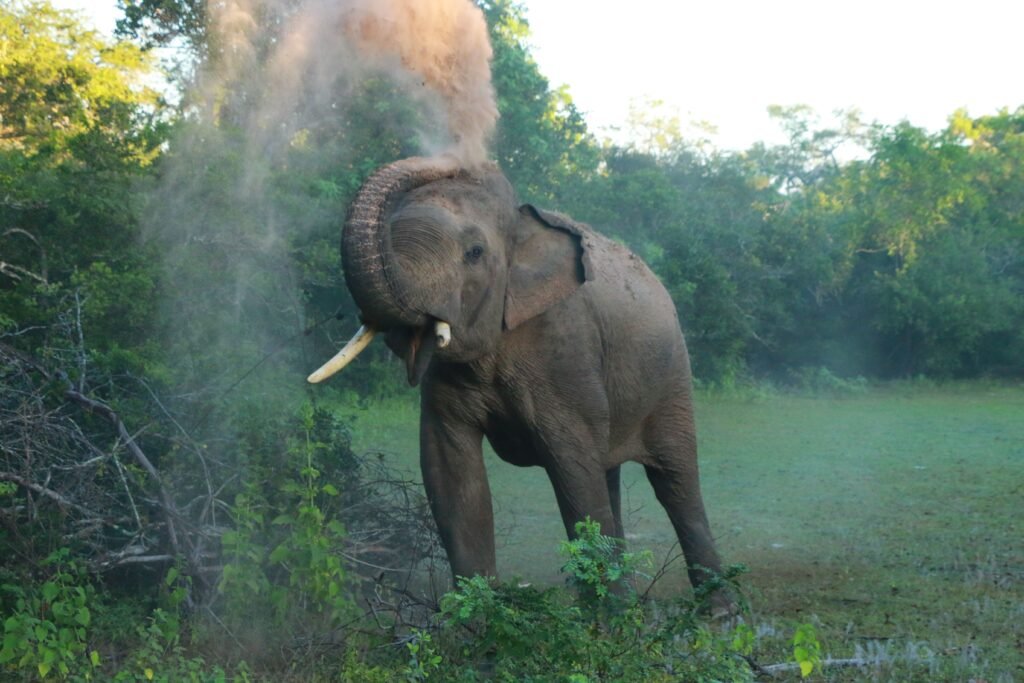
This incident is not merely a comedic anecdote; it underscores the ongoing conflict between humans and wildlife in Sri Lanka’s diverse ecosystem. The elephant’s choice to engage with a vehicle typically associated with tourism suggests an acute understanding of where food might be accessed and reveals insights about the changing dynamics of natural habitats. An elephant’s actions are not random; rather, they are reflective of the struggle to adapt in an environment where natural foraging becomes increasingly difficult due to human expansion.
The response to such incidents should not be to dehumanize the elephant but to foster understanding of its plight. Solutions to mitigate these conflicts are essential. Proposals could include educational initiatives for tourists, designed to inform them about local wildlife behavior and the ecological significance of elephants to their environments. Additionally, local governments may enhance efforts to create wildlife corridors and protected areas, enabling animals to roam without encroaching on human territories.
Furthermore, it is crucial for the tourism industry to take a more active role in these dimensions. The economic benefits of tourism must be balanced against the ecological costs. When a tuk-tuk is hijacked by an elephant in search of food, it becomes a representation of the failure to address habitat loss, as these creatures are forced to venture into human-dominated spaces.
The jovial nature of this incident should not overshadow the serious implications concerning how humans interact with and impact wildlife. Rather than merely celebrating such occurrences, it is time for all stakeholders—tourists, government bodies, and conservation groups—to engage in conversation about sustainable coexistence with the planet’s wildlife. Ultimately, it is vital for us to shift our perspective from that of voyeurs in nature to responsible participants in its preservation.