
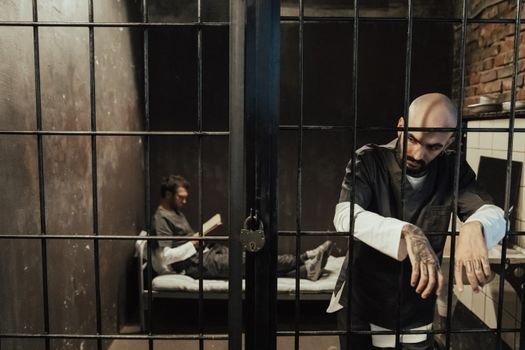
Amid the dense fabric of Sri Lanka’s struggle with systemic violence and institutional neglect, recent prison riots have drawn stark attention to the failings of a system meant to rehabilitate. On July 12, three inmates lost their lives during a clash at the Anuradhapura prison, an incident that highlights long-standing issues within the nation’s correctional facilities. The riots, which erupted due to overcrowding and poor living conditions, have ignited a debate about the human cost of ineffective penal policies in Sri Lanka.

With the Anuradhapura prison operating at double its intended capacity, housing approximately 2,700 inmates, the conditions have transformed these facilities into warehouses of despair rather than spaces for reform. Overcrowding is not merely a logistical failure; it incites violence, exacerbates tensions, and breeds an environment where inmates feel less like individuals and more like commodities devoid of rights or dignity.
The chaos that unfolded during the riots not only claimed lives but raised profound questions about governance and accountability. A significant lack of oversight is evident when examining the broader context of Sri Lanka’s penal system. With an estimated penitentiary capacity of just 9,261, the facility’s operational stress points—to accommodate more than 25,000 inmates—defy any semblance of humane treatment. Such overcrowding directly contravenes international human rights standards, yet the Sri Lankan government appears slow to address these pressing concerns.
The state’s failure to proactively reform an obsolete correctional system is both a moral and political indictment. Authorities have been lukewarm in their response, characterizing the unrest as isolated incidents rather than symptoms of a larger systemic disease. By relegating blame to the inmates’ behavior without addressing the root causes that lead to such desperate expressions of unrest, the government perpetuates a cycle of violence and suffering.
Critically, these riots serve as a wake-up call, revealing how marginalized groups—in this case, inmates—can become prisoners of both circumstance and state negligence. The fight in prisons extends beyond mere survival; it is a struggle for human dignity against a backdrop of legislative failure. The lack of robust reform ahead of these tragic events hints at a government more focused on maintaining the status quo than addressing the fundamental inadequacies haunting its prison system.
The urgency to enact reforms cannot be overstated. Sri Lanka has a choice: it can either continue to ignore the simmering tensions that lead to violence among its incarcerated population or fundamentally reimagine its approach to incarceration. The recent deaths at Anuradhapura should not merely be footnotes in a news cycle but rather a clarion call for immediate legislative and humanitarian action.
Failure to respond to these abject conditions could cost the nation not only in human lives but also in its long-term social stability and integrity. It is time for Sri Lankan authorities to confront the grim reality unfolding in their prisons; after all, the cost of inaction is far greater than the price of reform.