
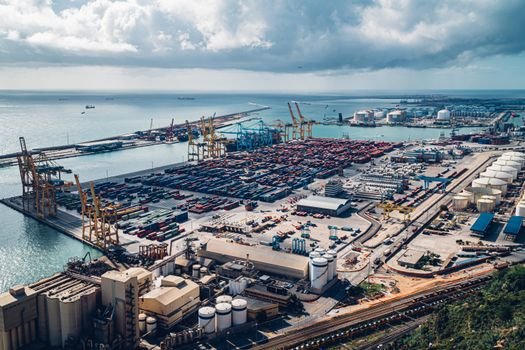
Sri Lanka, strategically poised along crucial shipping lanes, has faced considerable challenges in its ambition to establish itself as a maritime hub. Despite its advantageous geographical position, the island nation has struggled to attract foreign investment and develop the necessary infrastructure to capitalize on its location. This failure has implications not just for the country’s economic prospects, but also for regional maritime dynamics.

Investments in port infrastructure have been hindered by a series of governance issues and political instability that have plagued Sri Lanka in recent years. Reports of corruption within government contracting processes have further deterred international players from engaging with local projects. This lack of trust has not only stifled the potential for large-scale maritime operations but has also impacted ancillary industries, such as shipping and logistics, that depend on a vibrant maritime environment.
The failure isn’t merely a political or infrastructural one; it extends to strategic miscalculations. The local government’s inability to remain competitive has allowed neighboring countries to gain ground. India, for example, has actively worked to improve its own maritime capacities and has begun to overshadow Sri Lanka in the regional logistics sphere.
Economically, Sri Lanka’s fall into a debt crisis should serve as a wake-up call. High expectations set by government officials surrounding maritime developments contrasted sharply with the reality on the ground. Investment forecasts fell short, with only a fraction of anticipated foreign direct investment materializing. The statistical data showcasing these declines is stark: projected foreign investments in the maritime sector dropped significantly from what was earlier targeted, leading to a paradox where Sri Lanka, despite its advantage, remained a mere spectator in the game of global trade.
A critical factor that must be addressed is the lack of a cohesive national strategy for maritime development. A fragmented approach not only hampers progress but also breeds inefficiency within regulatory frameworks, stifling innovations that are crucial for competing in the logistics market. Furthermore, the local workforce has not been adequately trained to meet the demands of a modern shipping economy, resulting in a skills gap that has yet to be bridged.
Ultimately, Sri Lanka stands at a crossroads. The potential to transform into a maritime hub is tangible, yet it is currently mired in mismanagement and a fragmented approach to development. For the island to realize its aspirations, a robust, transparent, and inclusive strategy must be devised—one that not only boosts investor confidence but also builds a maritime ecosystem that can sustain growth and withstand the complexities of global commerce. Until these systemic issues are resolved, Sri Lanka is likely to remain a missed opportunity in the maritime landscape, despite the vast potential it holds.