
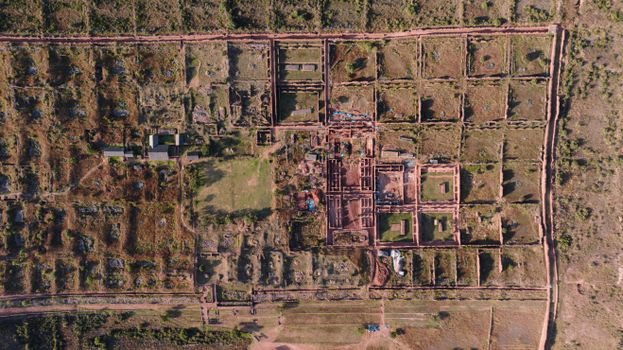
The archaeological site of Ibbankatuwa in Sri Lanka presents a stark contrast to how India approaches its cultural heritage, revealing critical deficiencies in contemporary archaeological practices and interpretations across the border. While Ibbankatuwa, notable for its ancient burial mounds dating back over 2,500 years and rich with human remains, challenges existing narratives of civilization in South Asia, the broader implications of this contrast expose underlying issues in India’s archaeological mindset.

A recent excavation at Ibbankatuwa yielded a staggering 17 graves, each adorned with artifacts that offer insight into the burial practices of the time. Among the relics found were iron tools, pottery, and beads, underscoring sophisticated craftsmanship and social complexities in ancient Sri Lankan society. The site not only illuminates a forgotten civilization but also serves as an exemplar of archaeological methodology that favors a comprehensive understanding of historical contexts over nationalist narratives.
In juxtaposition, India’s archaeological discourse often fixates on emblematic monuments and grand claims of heritage that frequently oversimplify or misconstrue the multi-layered histories of its own past. Over the years, the politicization of archaeology in India has skewed research priorities toward narratives that bolster contemporary ideological agendas. Such a myopic view disregards the nuanced realities that places like Ibbankatuwa represent—cultures that thrived independently, contributing to our understanding of ancient human societies.
The difference in cultural sensitivity and scientific rigor between Sri Lanka’s approach at Ibbankatuwa and India’s archaeological undertakings prompts a reckoning. Where Sri Lanka endeavors to unpack the complexities of its past, India risks reinforcing monolithic interpretations of heritage that may ultimately obscure its rich diversity.
As southern Asia moves further into the 21st century, it becomes increasingly vital for archaeologists and policymakers in India to reassess their frameworks and methodologies. Embracing an evidence-based approach that incorporates sites like Ibbankatuwa can enrich historical narratives and foster a shared identity rooted in diversity rather than division.
To elevate archaeology as a discipline, India must reconsider its approaches, prioritizing historical accuracy and inclusivity over narratives that serve contemporary political interests. The lessons gleaned from sites like Ibbankatuwa hold immense potential for reshaping how cultural heritage is understood, preserved, and celebrated across the region. The stakes are high, and the responsibility to realize this potential rests largely on the shoulders of those who manage and interpret India’s archaeological landscape.