

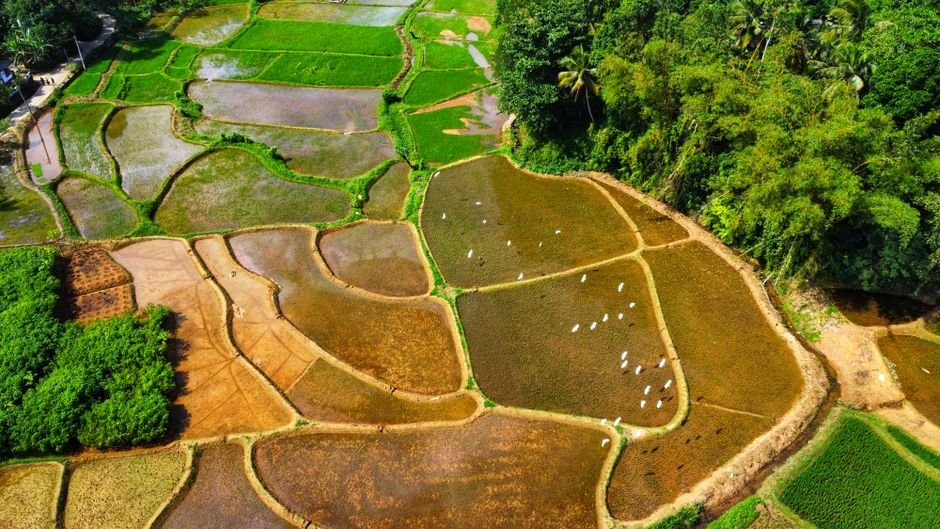
Discussions surrounding Sri Lanka’s food production and agricultural economy frequently center on a contentious 8% benchmark, a figure widely cited to describe the sector’s direct footprint. However, scrutiny of this metric highlights significant gaps between statistical conventions and the comprehensive reality of the country’s food ecosystem.

While direct output calculations often restrict the food and agricultural sector to roughly 8% of headline measurements, this baseline figure overlooks extensive backward and forward linkages. The broader food network encompasses input supply chains, post-harvest processing, transportation, wholesale distribution, and retail networks, alongside its foundational role in household sustenance and employment stability.
Key Developments
- Conventional benchmarks classifying the sector near an 8% share fail to reflect downstream value addition and distribution chains.
- The broader food network drives employment and daily economic activity far exceeding primary production estimates.
- Economic evaluations that rely solely on direct agricultural metrics risk underestimating systemic vulnerabilities across national supply routes.
Viewing national food systems strictly through isolated headline percentages presents policy risks. When decision-makers assess primary production without integrating processing, transport, and food security dynamics, resource allocation can fall short of stabilizing vital food supply networks against broader macroeconomic fluctuations.