
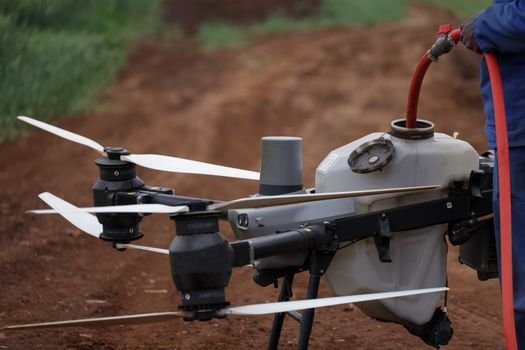
Sri Lanka’s recent initiative to deploy drones in the fight against dengue fever signals a significant pivot in public health strategy—one that marries traditional pest control with modern technology. The deployment of these drones poses both operational implications and ethical questions that warrant closer examination.

With dengue cases reported to have surged by 32% during 2023 when compared to the same period in 2022, the urgency for innovative solutions is palpable. This statistic isn’t just a number; it embodies the escalating public health crisis that has gripped Sri Lanka, highlighting the limitations of conventional methods in addressing vector control. The increase reinforces a sobering reality: existing strategies have failed to stem the tide of this mosquito-borne illness adequately.
The decision to integrate drones into monitoring and targeting breeding sites for Aedes mosquitoes may appear innovative, but it raises crucial considerations about efficacy and oversight. The drones are not merely machines; they symbolize a broader trend of applying surveillance technologies to health crises. One must question whether the benefits provided by these drones—such as rapid identification of breeding sites—outweigh potential privacy concerns and the implications of increased surveillance on local communities. Who monitors the monitors? The risk of misuse lurks in the shadows of technological marvels.
Financially, this move could represent a sound investment. The costs of managing a dengue epidemic—medical treatment, lost productivity, and social disruption—are substantial. By potentially reducing the mosquito population more efficiently than manual methods, drones may help lower these costs over time. However, the effectiveness of drone surveillance should not come at the price of transparency and community involvement in public health strategies.
Moreover, integrating drone technology raises questions about training and deployment. The Sri Lankan government’s ability to effectively utilize this technology amidst ongoing economic challenges—heightened by the recent financial crisis—remains uncertain. Proper training for personnel is indispensable, and an under-resourced health sector may stymie these efforts before they reach their full potential.
Sri Lanka stands at a crossroads. The adoption of drones to combat dengue illustrates a modern approach to an age-old problem, but the execution and governance of this innovation will determine its success. As dengue outbreaks continue to rise and traditional methods falter, there is no doubt that bold steps are required. Yet these steps must be taken without sacrificing ethical considerations or community trust. Moving forward, striking a balance between technological advancements and the socio-cultural landscape of public health will be vital. It’s a challenge that will demand not just innovation, but also accountability.