
Celestial Event Over Sri Lanka: A Unique Opportunity for Skywatchers
Tomorrow, Sri Lanka’s skies will host a rare celestial event featuring six planets alongside the peak of the Perseid meteor shower. According to the Astronomy Division of the Arthur C. Clarke Institute for Modern Technologies, observers can expect to see Mercury, Mars, Jupiter, Saturn, Uranus, and Neptune forming a broad arc across the eastern and southern horizons before dawn.

Timing and Visibility
The best opportunity for viewing this planetary alignment from Colombo is set for between 4:30 a.m. and 5:15 a.m., approximately 60 to 90 minutes prior to sunrise. Mars and Saturn should be the easiest to spot for casual observers, while the fainter Mercury and Jupiter may pose challenges, appearing very close to the horizon. Notably, Uranus will demand binoculars and Neptune will require a telescope for a successful sighting.
The Perseid Meteor Shower: A Spectacular Companion
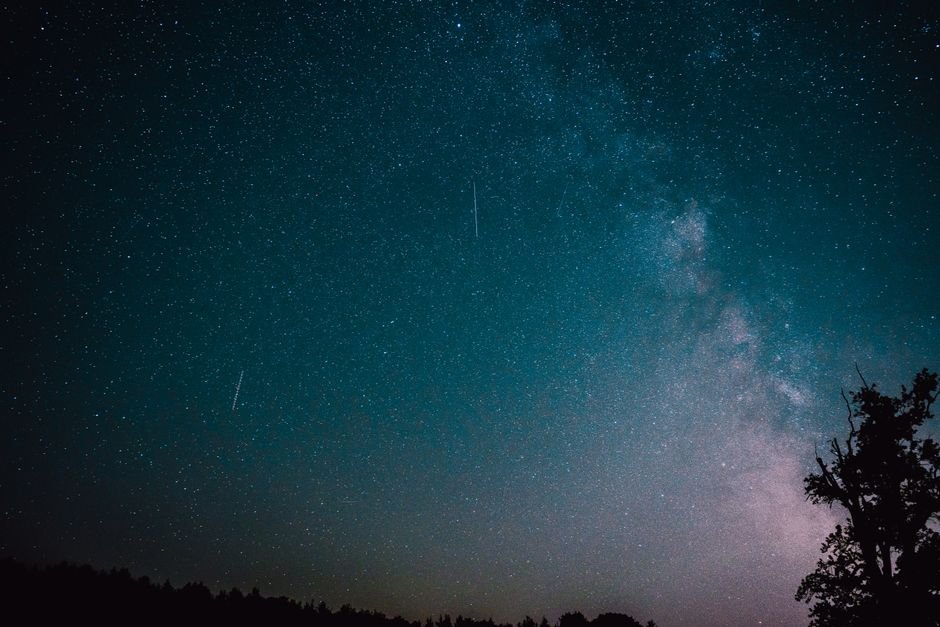
In conjunction with the planetary display, the Perseid meteor shower, active from July 17 to August 24, is anticipated to reach its peak overnight into tomorrow. This annual spectacle is caused by debris from Comet 109P/Swift-Tuttle, which completes an orbit around the Sun every 133 years. Observers are urged to look towards the northeastern sky after midnight, allowing their eyes to adjust to the dark for optimal visibility. Under ideal conditions, up to 100 meteors per hour may be observed, a vivid reminder of the transient beauty of the cosmos.
The Significance of Timing: New Moon Effects
This year’s meteor shower coincides with a new moon, which results in darker skies—an advantage for stargazers. The combination of both the planetary alignment and the meteor shower presents a unique opportunity for educational and public engagement in astronomy. It is an occasion that highlights the significance of skywatching as a community event that can spark interest in science and the wonders of the universe.
Practical Advice for Observers
For those eager to capitalize on this unique astronomical double feature, the Arthur C. Clarke Institute advises finding a location with an unobstructed view of the eastern and southeastern horizons. Understanding the visibility requirements and the importance of a dark environment will be crucial for maximizing the viewing experience.
A Broader Reflection on Astronomy Engagement
Events like the upcoming planetary alignment and meteor shower serve as valuable reminders of the universe’s vastness and beauty. They present an opportunity for educational outreach to foster a deeper understanding of celestial phenomena. Encouraging public participation in skywatching not only enhances community engagement with science but also generates critical discussion about our place in the cosmos. As Sri Lankans prepare for this momentous occasion, the hope is that curiosity about the skies will lead to a greater appreciation for scientific inquiry and exploration.