
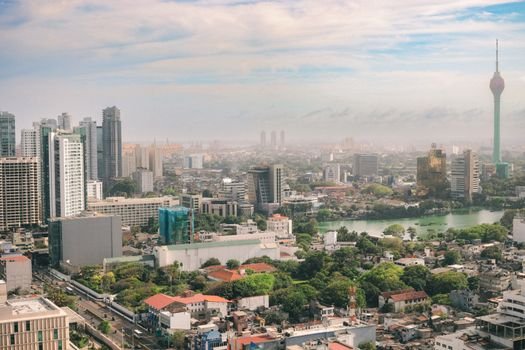
Sri Lanka’s efforts to attract U.S. investments for the development of Colombo Port highlight a crucial strategic pivot in the nation’s economic landscape. By specifically targeting American capital, the Sri Lankan government is not merely seeking to enhance its gateway to South Asia but is also indicating a broader ambition to diversify its investor base and lessen reliance on traditional partners.
The Colombo Port, a vital asset for both domestic and regional trade, underscores the significant economic potential tied to maritime logistics and infrastructure. The stakes are particularly high in this context; the port is poised to facilitate increased trade volumes, potentially bolstering the nation’s economy in a challenging post-pandemic recovery period. However, this endeavor raises questions about the sustainability of such investments and the geopolitical ramifications tied to U.S. involvement.
As global supply chains continue to face disruption, enhancing port facilities could position Sri Lanka as a competitive alternative for shipping routes that connect Asia with markets in the West. Yet, the government must consider whether the terms of investment will favor local job creation and infrastructure ownership or primarily benefit foreign stakeholders. Transparency in negotiations will be essential to ensure that Sri Lanka does not end up with a deal that favors immediate financial gain over long-term economic stability.
The broader regional dynamics complicate the picture. While the U.S. may view increased investment in Colombo as part of a strategy to counterbalance China’s influence—given the latter’s significant investments in South Asia—this could inadvertently create a geopolitical tug-of-war. Sri Lanka’s leadership must tread carefully, balancing these foreign relationships while prioritizing national interests.
The anticipated influx of U.S. funds into the Colombo Port warrants skepticism. Such investments are often accompanied by stringent conditions that can hinder local governance and regulatory autonomy. The risk of eroding national ownership of critical infrastructure while courting international capital cannot be overlooked. Sri Lanka’s leadership must navigate these waters with a keen awareness of historical precedents where countries have exchanged autonomy for foreign aid and investment.
In summary, while courting U.S. investments for Colombo Port development may offer immediate economic benefits, it is imperative for Sri Lanka to evaluate the long-term implications of such relations. The challenge will lie in securing financial support that aligns with the nation’s strategic autonomy and economic resilience—balancing ambition with prudence. Ensuring that the benefits of investment accrue to the national workforce and economy, rather than merely enriching external interests, will be the true measure of success in this critical endeavor.