
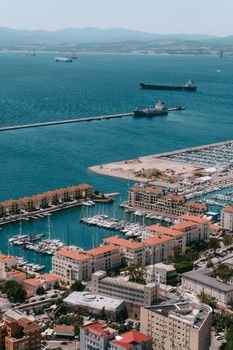
Sri Lanka’s recent outreach to business leaders in the United Arab Emirates (UAE) in a bid to establish Port City as a pivotal gateway to South Asia reflects both ambition and the complexities inherent in such multi-national initiatives. Positioned strategically along global shipping routes, the Port City project aspires to serve as a hub for commerce, finance, and leisure, yet the execution of this vision demands scrutiny regarding its feasibility and potential impacts.

The choice to engage with UAE business leaders indicates an intention to foster ties with influential corporate interests in a rapidly developing market. The UAE has positioned itself as a regional powerhouse, leveraging its financial resources and strategic location. However, this engagement raises questions about Sri Lanka’s dependency on foreign investments and the sustainability of its economic models, which often lean heavily on external stakeholders.
While the UAE is often touted as a vibrant economic landscape, Sri Lanka’s past experiences with foreign investment should inform its strategy moving forward. There is significant risk in relying on external entities, particularly when economic crises can alter investment landscapes overnight. Will Port City attract the intended investors, or will it become another ambitious project without the necessary local or regional backing to ensure its longevity?
Promoting Port City as the “South Asian gateway” also necessitates a critical evaluation of regional competition. Neighboring countries are not idle; they are actively pursuing similar goals, enhancing their own port infrastructures and trade agreements. Without a compelling differentiation strategy, Sri Lanka’s attempt to establish a foothold in this competitive arena could falter.
The local population must also be considered in this narrative. Economic growth that relies on foreign investments should also translate into tangible benefits for Sri Lankans. Job creation, improved local businesses, and enhanced infrastructure are essential components of success but often remain secondary in discussions centered on foreign capital. The focus on business leaders in the UAE underlines a potential disconnect between government ambitions and local economic realities.
These efforts come at a time when Sri Lanka’s economy is still recovering from significant setbacks, which raises further questions about the viability of such large-scale projects. Questions regarding the financial commitments for the development, particularly against the backdrop of the country’s prior challenges—such as the credit crisis and social issues—must be addressed. There is a fine line between strategic investment and reckless ambition, a line that Sri Lankan officials must navigate carefully as they move forward.
In summation, while the endeavor to position Port City as a gateway to South Asia is laudable and can catalyze growth, its design and execution must be meticulously planned with a clear understanding of both local and regional contexts. Whether this project can successfully attract the desired investment while concurrently benefiting the Sri Lankan population will ultimately define its legacy.