
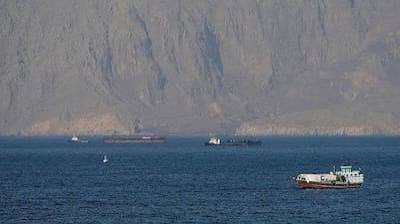
Analysis of South Asia’s Energy Vulnerabilities Amid Strait of Hormuz Disruption
The ongoing shipping disruptions in the Strait of Hormuz have starkly illustrated the precarious nature of energy security for South Asian nations, reliant on a volatile geopolitical landscape for essential imports. The strait is a critical artery, facilitating roughly one-quarter of global seaborne oil trade and about one-fifth of the world’s liquefied natural gas (LNG) shipments. With around 95 percent of Bangladesh’s oil and a significant portion of Pakistan’s and India’s energy needs sourced from the Middle East, the region’s economies are on the brink of crisis due to upheaval in oil and gas supply chains.

India: A Positioned Yet Pressure-Bound Economy
India, the world’s third-largest energy consumer, stands at a crossroads as it grapples with rising energy costs attributed to the conflict in the Middle East. The country imports approximately 89 percent of its crude oil, 50 percent of its natural gas, and 60 percent of its liquefied petroleum gas (LPG). While providing an initial buffer against price hikes through state interventions, continued disruptions are putting significant pressure on the economy. Per reports, the state-owned oil marketing companies are absorbing losses of nearly INR 1,000 crore (approximately US$105 million) daily due to soaring oil prices.
As of May 2026, with inventories holding about 60 days of crude oil and gas, India’s resilience is increasingly under threat. The depreciation of the Indian rupee by over five percent since the crisis began and reports of fertilizer plants receiving only 70 percent of their gas requirements reflect an urgent need for diversifying energy partnerships. Although India has increased crude sourcing from 21 to 41 countries, its heavy reliance on the Persian Gulf exposes it to significant risk factors.
Bangladesh: A Tale of Heightened Vulnerability
Bangladesh imports nearly 95 percent of its oil and 30 percent of its gas, making it particularly susceptible to disruption. Alarmingly, fossil fuel imports now represent two-thirds of the country’s total primary energy, escalating from 47.7 percent in FY 2020-21 to 62.5 percent in FY 2024-25. This dependency has resulted in extended power outages, shutdowns of fertilizer plants, and significant impacts on its garment sector, which forms 80–85 percent of its exports.
In response, Bangladesh’s government has sought over US$2 billion in emergency support from multilateral institutions, while the World Bank has approved US$1.1 billion in emergency financing to mitigate energy pressures. With only 2.3 percent of its electricity generation coming from renewable resources, Bangladesh’s reliance on fossil fuels reveals a pressing need for a paradigm shift in its energy strategy.
Pakistan: From Surplus to Strain
Pakistan’s response to the Hormuz crisis is similarly marked by heightened vulnerabilities, with approximately 86 percent of its energy needs imported, including over 80 percent of its oil. The rising weekly oil import bill, escalating from US$300 million to about US$800 million post-crisis, highlights severe fiscal strains. Efforts to divert energy imports towards sources like Russia are in contradiction with existing economic constraints from a US$7 billion IMF program.
The swift transition from an LNG surplus to a looming deficiency underscores how delicate Pakistan’s energy landscape is. Despite the success of solar energy adoption, recent policy changes that have shifted from net metering to net billing threaten to undermine this advancement.
Sri Lanka: Navigating Repeated Crises
Sri Lanka, reeling from its 2022 economic crisis, has seen fuel prices rise by 48 percent since the Hormuz disruptions began, coupled with an 18 percent hike in electricity rates to meet IMF targets. The situation is exacerbated by the country’s limited ability to replace fossil fuel imports and a public debt level of around 101 percent of GDP. The government’s shift towards rationing and diversification signals an urgent need for structural reforms. Yet, the fiscal constraints under the IMF program challenge sustainable solutions.
Smaller Economies: Compounded Challenges
Countries like Bhutan, the Maldives, and Nepal face their own unique vulnerabilities amid the energy crisis. Nepal’s reliance on India for petroleum and Bhutan’s import dependencies, juxtaposed with their limited domestic production, magnify the fallout from external shocks. The Maldives, with public debt at around 130 percent of GDP and a staggering dependence on imported fuel, showcases the simplest yet stark reality of vulnerability in the face of geopolitical tussles.
Common Themes and Future Outlook
Across South Asia, a clear trend has emerged: the reliance on demand suppression as a policy tool, manipulating working hours and adjusting educational schedules to manage energy consumption. As inflation spikes, currency depreciation becomes a shared narrative. Measures taken hint at a broader regional strategy to diversify energy sources away from the Persian Gulf.
With Canada presenting opportunities to fill energy gaps through exports, the necessity to move beyond traditional partnerships becomes evident. Canada’s existing infrastructure is poised to capitalize on these emerging market needs, particularly in LNG and fertilizer sectors.
The unresolved questions linger: will South Asia harness this moment to implement lasting structural reforms in its energy policies, or will it remain shackled to a precarious energy dependence? The answers will significantly influence the region’s economic stability in the immediate future.