
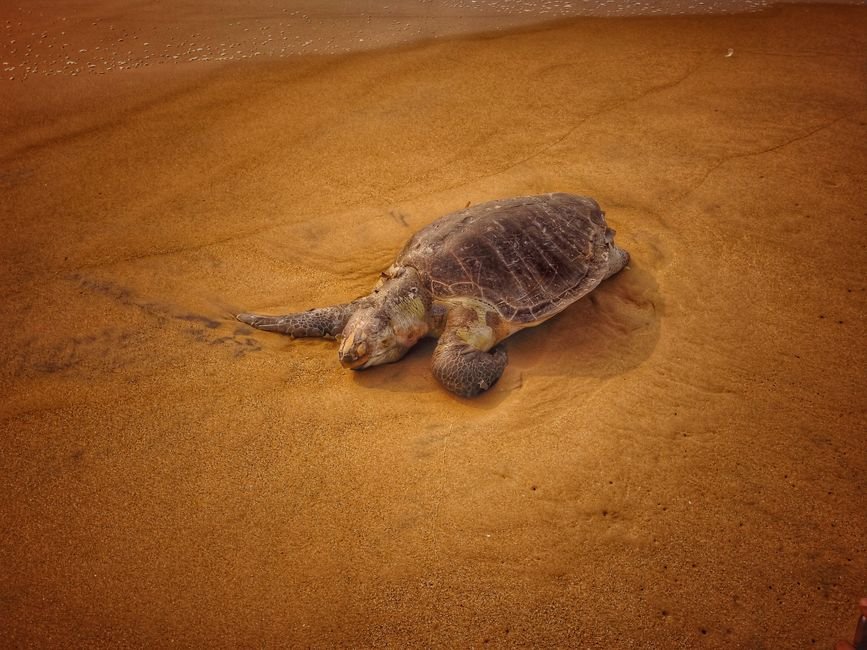
A satellite-tagged Olive turtle released from the coast of Odisha has completed an extraordinary long-distance oceanic journey, traveling a total of 6,719 kilometers over 271 days to reach the coastal waters of Sri Lanka. The groundbreaking tracking data offers vital empirical evidence regarding the migratory routes, pelagic behavior, and navigational habits of sea turtles moving across the Bay of Bengal and the Indian Ocean.

Equipped with advanced satellite transmitters, the marine reptile was tracked over a period spanning nearly nine months as it navigated open-sea conditions, ocean currents, and international maritime zones. Initiated along the eastern shoreline of Odisha—a region internationally renowned as a critical nesting haven for Olive Ridley turtles—the journey demonstrates the vast geographical scope these animals cover between nesting and foraging cycles.
The extensive tracking data underscores the deep ecological connectivity between Indian coastal marine ecosystems and the surrounding territorial waters of Sri Lanka. As sea turtles traverse thousands of kilometers across high seas and multiple national jurisdictions, they face significant anthropogenic risks, including accidental entanglement in commercial fishing gear, plastic marine debris, and heavy maritime shipping traffic.
Key Developments
- Significant Distance Traversed: The tagged Olive turtle logged a total distance of 6,719 kilometers during its multi-month oceanic trek.
- Extended Tracking Duration: The satellite monitoring spanned 271 days, tracking the turtle from its origin in Odisha to its arrival off Sri Lanka.
- Regional Connectivity: Findings confirm direct migratory corridors linking Odisha’s coastal nesting habitats to regional foraging grounds in Sri Lankan waters.
The success of the satellite tracking study highlights the critical necessity of regional cooperation and synchronized marine conservation policies across South Asia. Uncovering these extended oceanic pathways provides environmental authorities and marine biologists with essential spatial data needed to establish protected marine corridors and ensure the long-term survival of vulnerable sea turtle populations.