
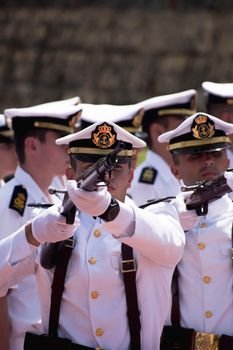
The appointment of a new Chief of Staff to the Navy has implications that extend beyond mere personnel changes in Sri Lanka’s defense apparatus. As the nation navigates complex geopolitical waters, the role of this new appointment becomes imperative not only for military readiness but also for the political landscape of the country.

In recent years, the Sri Lankan Navy has increasingly found itself at the center of regional maritime tensions. This appointment comes at a time when global powers are vying for influence in the Indian Ocean, raising the stakes for national security strategies. The question remains: will the new Chief of Staff be able to enhance the Navy’s operational capabilities and strategic foresight to respond effectively to these challenges?
Historically, the Navy has suffered from budgetary constraints and resource allocations that often do not match its operational demands. Effective leadership is key in such environments; the new Chief must navigate these limitations while advocating for the necessary resources to bolster naval capabilities. This requires not just leadership but also an acute understanding of both local and international maritime dynamics.
The political ramifications of this shift cannot be ignored. Public perception of military leadership is directly tied to broader sentiments about governance and stability in Sri Lanka. The Navy’s Chief of Staff is often seen as a barometer for military integrity and transparency—if this appointment is perceived as politically motivated or unmeritocratic, it could foster public discontent. Establishing a trajectory of credible military leadership is critical to maintaining civilian trust and support.
Furthermore, the appointment signifies the need for a strategic vision that aligns with national interests, particularly in maritime security. The new Chief’s performance will be scrutinized not just in immediate operational terms, but also in how they contribute to long-term security frameworks amidst evolving regional threats.
All eyes will be on this new era in naval leadership. Whether the personnel changes lead to enhanced efficacy in addressing pressing security concerns or whether they serve merely as a bureaucratic shuffle will be revealed in the coming months. The responsibility is substantial, and the stakes are high, both for the Navy and for the country’s stability on the global stage.