
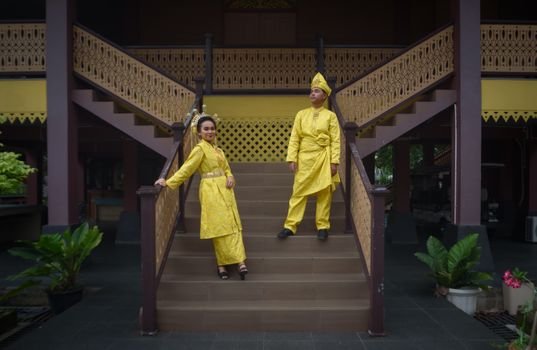
The issue of political representation for minority communities often serves as a litmus test for the health of a nation’s democracy. In Sri Lanka, the call for Malay political representation raises significant questions about equity and inclusion in a landscape historically fragmented along ethnic and linguistic lines.

The Malay community in Sri Lanka, often marginalized, claims a rich heritage that predates colonial rule. The assertion that they were “here first” is not merely a statement of pride; it challenges the narrative of who deserves a voice in governance structures traditionally dominated by larger ethnic groups. Yet, the numbers paint a stark picture of under-representation. Despite comprising an estimated 0.3% of the population, Malaya’s political influence remains negligible. In a country where the majority Sinhalese hold approximately 75% of political power, the imbalances are glaring.
The calls for increased representation are not merely about securing seats; they underpin broader struggles for rights and recognition. In Sri Lanka’s political framework, disruptions arise when representation is uneven, leading to alienation of smaller communities. The Malay population seeks equal participation that reflects their unique cultural identity and history.
This context demands scrutiny of existing political structures. The disinterest from mainstream parties to engage with smaller communities indicates a broader systemic issue in Sri Lanka’s approach to governance. The political arena tends to prioritize majoritarianism over pluralism, thereby exacerbating disparities that fuel dissent and unrest.
Consider the fiscal implications as well; marginalized demographics often correlate with underinvestment in local community services, further perpetuating cycles of inequality. When smaller communities, like that of the Malay, lack representation, policy decisions skew overwhelmingly in favor of the dominant groups, leading to inadequate resource allocation and development opportunities for minorities.
Consequently, the demand for representation is tied to a broader socioeconomic narrative. The push for Malay political inclusion is not merely a question of political favor; it is a fundamental demand for justice and equity. As Sri Lanka grapples with its political identity post-civil war, the challenge will be finding a governance structure that does not just serve the interests of the majority, but also gives fair representation to its diverse tapestry of communities.
To ignore the calls for Malay representation risks deepening divisions that have long characterized Sri Lanka’s socio-political landscape. For a country eager to move forward from the shadows of its past, acknowledging all voices—especially those of marginalized communities—remains essential. The Malay community’s insistence on political representation is a reflection of their rightful place in this nation’s future.