
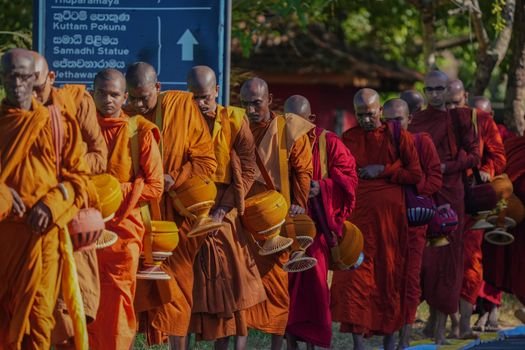
The Indian High Commission’s recent clarification regarding the visa process for Sri Lankan pilgrims shines a light on the ongoing complexities between these two neighboring nations. As annual pilgrimages garner thousands of attendees, the necessity for a streamlined, transparent visa process becomes paramount. Yet, the current situation raises questions about bureaucratic efficiency and bilateral relations.

There is a growing interest among Sri Lankans in traveling to India, particularly for religious purposes. However, this interest is often met with hurdles. The Indian High Commission’s specification on visa applications highlights not only the procedural intricacies involved but also the potential for misunderstandings that can arise during such a process. The need for clarity in communication is evident, especially in a region where thousands venture across borders for religious observances.
The gravity of the situation is amplified by the sheer number of pilgrims involved. Each year, significant figures are associated with these religious journeys, yet the capacity of the Indian visa system to handle these demands remains in question. A simplified and efficient visa application process is not merely a logistical necessity but also a diplomatic imperative. The experience of Sri Lankan pilgrims at this juncture could either strengthen or strain ties, depending significantly on the efficacy of the visa process.
Bureaucratic delays or confusion can lead to broader repercussions, impacting public sentiment on both sides. Pilgrimages often symbolize more than just religious commitment; they form ties of cultural significance that can enhance goodwill. It becomes essential for the Indian government to consider how the current visa protocol could disrupt these ties or lead to disappointment and backlash among hopeful pilgrims.
The Indian High Commission’s efforts to clarify the process should be commended, but clarity must translate into action. There must be a commitment to ensuring that the processing times and requirements are not only communicated accurately but are also reflective of the pilgrimage’s nature. Given the complexity of the current geopolitical landscape, enhancing the experience for Sri Lankan pilgrims could serve as an important step toward fostering improved relations.
Ultimately, as both nations navigate their complicated historical ties, it is in their mutual interest to prioritize the facilitation of cross-border exchanges. For Sri Lankan pilgrims, the journey to India for spiritual reasons symbolizes a quest for shared heritage and faith. The Indian High Commission has an opportunity here to play a transformative role in this pilgrimage experience—one that could contribute positively to the broader narrative of cooperation and mutual respect between two nations that share so much more than just a border.