
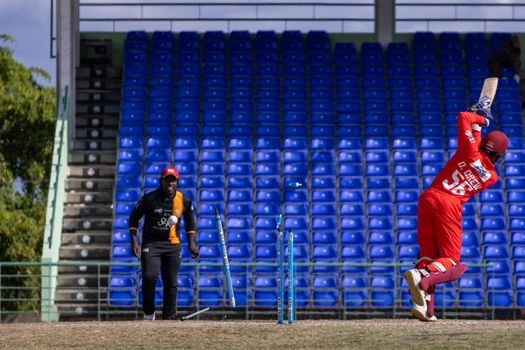
The fitness of Shimron Hetmyer, the West Indies cricketer, has taken center stage ahead of the second Test against Sri Lanka. His return to full fitness comes as a significant boost for the team, illustrating the fine balance between individual health and collective performance. While this news appears straightforward, it carries deeper implications for both the West Indies cricket team and the broader context of sports health management.

Hetmyer’s availability underscores the critical nature of player fitness in high-stakes international competitions. In a sport where performance can hinge on the contributions of a few key players, having a fit and dynamic Hetmyer could determine not just the outcome of this Test match, but also influence the West Indies’ trajectory in the series. The psychological edge offered by a strong lineup cannot be underestimated, particularly when facing a competitive opponent like Sri Lanka.
However, there lurk questions about the management practices leading up to this moment. The fitness of players must not only be monitored but should inform decisions about their workload and recovery periods. An early mishandling of an injury can lead to greater long-term issues, both for the player and the team’s strategy. This instance serves as a reminder of how vital it is for teams to foster an environment where athlete health is prioritised, ensuring that fitness regimens are tailored adequately to prevent injuries and to enhance performance on the pitch.
As the West Indies prepare for what promises to be a testing encounter against Sri Lanka, Hetmyer’s recovery will be scrutinized by fans and analysts alike. His history reflects the broader challenges players face in balancing competitive demands with personal health. Success in sports is no longer merely a factor of skill; it hinges on the intricate interplay of physical conditioning, mental fortitude, and injury management. The decision regarding his inclusion in the lineup not only has ramifications for the current sporting contest but also raises pertinent questions about the frameworks that govern player health in elite sports.
Thus, as the second Test approaches, one must consider the implications of pivotal player health decisions. Are teams equipped adequately to handle such situations? Is the dialogue surrounding player fitness robust enough to mitigate risks? Hetmyer’s readiness to join the fray may signal hope for the West Indies cricket team, but it invites a broader discussion on how the sport navigates the treacherous waters of athlete well-being.