
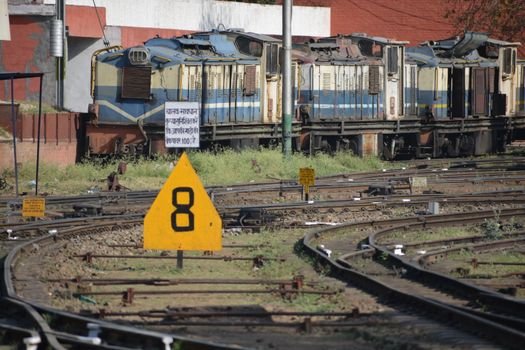
Ghana’s railway landscape is at a crossroads as the Ghana Railway Authority finds itself defending its decision to procure new locomotives amid criticism from the New Patriotic Party (NPP). This situation encapsulates the tensions between governmental oversight, infrastructural investment, and political scrutiny in a nation striving for economic growth and transport modernization.

The crux of the issue is the financial investment in these new locomotives, an endeavor that undoubtedly entails significant fiscal resource allocation. However, the public discourse surrounding such investments can easily overlook the critical question: how effective will this procurement be in revitalizing the rail network and serving the population’s needs? The Authority’s defense needs to be bolstered by clear evidence of both the operational benefits of these new assets and their projected impact on the economic efficiency of rail transport.
The NPP’s criticism raises an essential point about accountability and transparency in governmental expenditures. In a climate where financial resources are often tight, the scrutiny over infrastructural spending warrants attention. The Ghana Railway Authority must not only explain the rationale behind this acquisition but also articulate how these new locomotives align with broader transport policy objectives and economic goals. Are these locomotives a strategic response to increasing freight demands, or simply an expensive addition to an underutilized network?
Financial accountability does not stop at procurement; it extends to the lifecycle management of assets. What are the projected maintenance costs associated with these new locomotives, and how will they impact the overall budget of the railway system? The Authority must provide a comprehensive cost-parity analysis comparing these new acquisitions to ongoing maintenance of existing fleet operations. Without this level of analysis, critics are left with reasonable doubts regarding the prudence of investing in new rolling stock when the network itself may require extensive upgrades.
Moreover, the discussion should encompass the potential socio-economic benefits of improved rail services. An effectively modernized railway system can lower transportation costs, alleviate urban traffic congestion, and contribute to environmental sustainability by providing a less carbon-intensive alternative to road transport. The government must dream beyond the iron and steel of new locomotives and articulate a vision for transforming Ghana’s logistics landscape, ultimately contributing to economic expansion.
The interplay of political criticism and governmental response in this situation requires a resolution that emphasizes collaboration over confrontation. Rather than being seen solely as a defense mechanism, the Ghana Railway Authority’s explanation could serve as an opportunity for stakeholders to engage in discussions about the future of railways in Ghana. The Authority must be open to feedback from the political opposition and the public to foster an environment where infrastructural investments serve as vehicles of national cohesion rather than fuel for partisan discord.
In summary, the scrutiny of new locomotives procured by the Ghana Railway Authority goes beyond mere criticism; it’s a pivotal moment for Ghana to reassess its transportation strategy. Transparency, accountability, and a clear vision for the future will increase the legitimacy of these investments, helping transform railways into a cornerstone of Ghana’s economic and infrastructural development.