
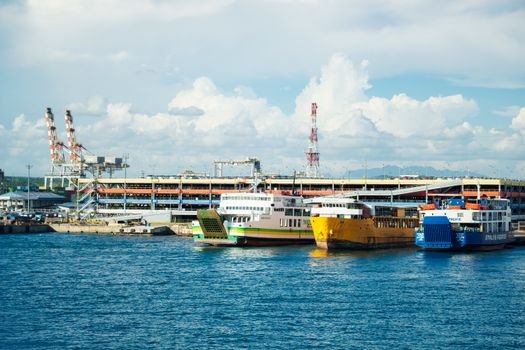
Colombo Port Achieves Record Growth Amidst Global Challenges
The Port of Colombo is making headlines in mid-2026, reporting exceptional growth fueled by increased operational capacity and strategic expansions. According to JKH Chairperson Krishan Balendra, the port is operating at near full capacity, a remarkable achievement particularly notable for the newly inaugurated Colombo West International Terminal (CWIT), which has reached full utilization just a year after its launch.

Driving Factors Behind the Growth
Balendra lauded the robust performance of the Port during a recent Investor Webinar, stating, “The CWIT, which commenced operations in April of last year, is already at full capacity utilization and is anticipated to expand further.” The uptick in business is not limited to container shipments; even the bunkering services are seeing a positive impact from rising activity levels.
Echoing Balendra’s sentiments, JKH Deputy Chairperson and Group Finance Director Gihan Cooray emphasized that the Port City is set for further growth, with CWIT already handling around 460,000 TEUs against a total installed capacity of approximately 1.6 million TEUs in its first phase. “Overall volumes at the Port of Colombo have remained steady, with growth driven by increased capacity from the West Container Terminal,” he noted.
Impressive Statistics Reflect Expansion
The latest figures from the Sri Lanka Ports Authority (SLPA) reveal that the port recorded 2,915,004 TEUs in the first four months of 2026, marking a striking 13.9% increase compared to the same period in 2025. This consistent growth trajectory suggests that the port is on track to exceed 10 million TEUs in deep-water handling capacity as new terminal operations ramp up by year-end.
Notably, transshipment volumes have also flourished, with the CWIT report indicating that the port managed to handle 3.7 million TEUs in just the first five months of 2026. Cooray speculated that the current growth reflects a more permanent demand rather than a temporary benefit, despite ongoing disruptions in global trade patterns due to conflicts in the Middle East.
Future Prospects and Environmental Commitment
As Colombo Port gears up for further operational enhancements, the CWIT’s upcoming Phase 2 is expected to drive additional capacity improvements while bolstering environmental sustainability through green cargo handling initiatives. “The improvements are set to solidify the Port of Colombo’s status as a leading regional maritime and logistics hub,” Cooray affirmed, underscoring the strategic importance of these advancements for Sri Lanka’s long-term economic growth.
In conclusion, the Port of Colombo’s remarkable growth amidst global uncertainties not only signifies resilience but also highlights the region’s potential as a critical player in the maritime sector. With planned expansions and improved infrastructural capabilities, the port is poised for a bright future.