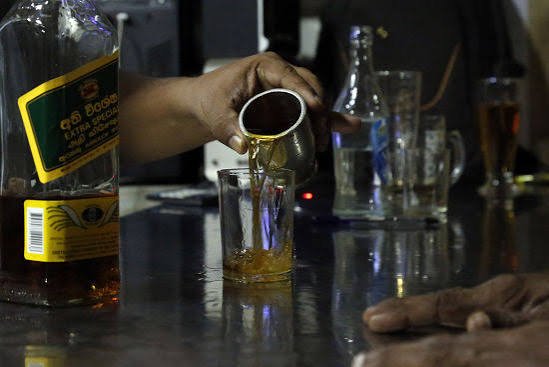

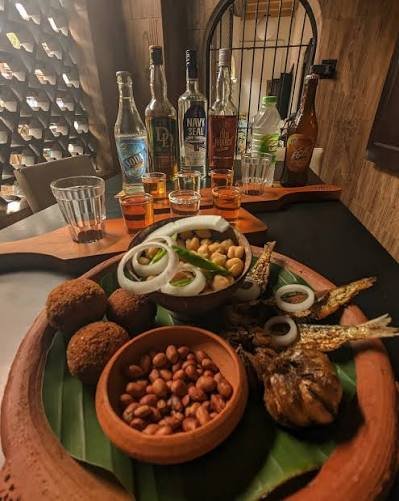
Long before sleek metallic hip flasks became urban accoutrements, the island had perfected its own vessels of indulgence. It began with the humble flat glass pint—a gently curved silhouette pressed against the hip, designed precisely to tuck beneath the waist folds of a cotton sarong. From rustic wayside taverns smelling of wet coir and raw spirit to the varnished mahogany bars of colonial cricket clubs, arrack has long coursed through the island’s bloodstream, serving as equal parts social lubricant, catalyst of political wit, and the very engine that forged modern wealth.

The ritual was elemental. Before distillation transformed it into golden fire, it began atop the windblown canopy of the coconut palms. Toddy tappers, traversing aerial tightropes, gathered the sweet, oozing sap of the unopened coconut or palmyrah flower into rustic earthenware pots, or mutti. By midday, under the tropical sun, the nectar fermented naturally into rā—a frothy, milky palm cider tingling with sharp acidity and a gentle buzz of four to six percent proof, traditionally chased with nothing more complex than bruised fiery green chillies and raw red onions. Distilled down and aged in mellowing vats of native halmilla wood, this rustic harvest evolved into a spirit that conquered taverns, high tables, and imperial ledger books alike.
The Renda Bourgeoisie: How Nobodies Became Somebodies
Arrack’s true historical potency lies not merely in its proof, but in its economic alchemy. During the era of Dutch and British colonial rule, the island’s liquor trade shattered ancient, rigid feudal caste structures. Seeking vast administrative revenues, the colonial government introduced the system of arrack rents—auctioning off exclusive regional monopolies for the distillation and retail sale of toddy and spirit to the highest local bidder.
As plantation capitalism expanded across the hills and coasts, drawing immense legions of laborers, the demand for liquor surged. Enterprising local merchants—often dismissively labeled ‘nobodies’ because they lacked aristocratic pedigree or high-caste feudal landholdings—stepped into the fray. By securing these lucrative liquor concessions, known locally as the renda business, these families amassed unprecedented private fortunes. As documented in landmark sociological histories of the colonial bourgeoisie, these newly minted arrack magnates channeled their liquidity into graphite mining, vast rubber, coffee, and coconut estates, and modern schooling for their heirs, ultimately reshaping the political and economic elite of modern Ceylon.
Pioneers, Sodas, and Clubland Punches
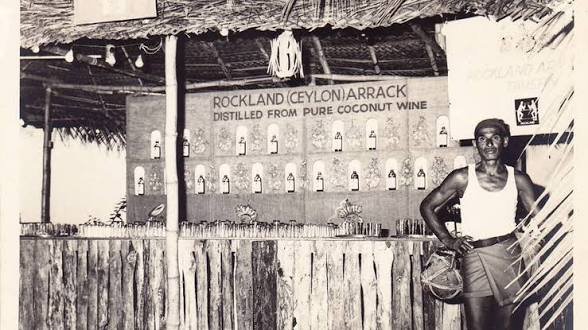
As the twentieth century dawned, the trade evolved from chaotic rent auctions into an organized, industrialized enterprise. The Excise Ordinance of 1912 established formal state oversight, paving the way for pioneering private distillers. In 1924, J.B.M. Pereira established Rockland Distilleries, importing French stills to pioneer large-scale commercial production, while houses like W.M. Mendis & Co. later built enduring domestic legacies with coveted miniature glass bottles and amber blends.
The spirit’s character was mirrored in what accompanied it. Across generations, arrack found its quintessential foil in homegrown mixers. Predating global soft drink conglomerates, the Colombo Ice Company—founded in 1866 and later renowned as Elephant House—produced sharp, crystalline sodas and Elephant House Ginger Beer (EGB). A shot of harsh, unaged arrack splashed into a tumbler of fiery EGB formed an authentic Ceylon Mule. At colonial-era rest houses, it was elevated into the historic Ceylon Punch, honoring the Hindustani root panch with its harmonious fivefold balance of aged arrack, sugar, fresh lime juice, water, and aromatic island spices like cinnamon and cloves.
Folklore, Fables, and the Living Spirit
Arrack’s cultural resonance inevitably seeped into the highest halls of power. Decades ago, it became permanent political folklore during the presidency of Chandrika Bandaranaike Kumaratunga, commemorated in the popular rhyme of arraku and parakku—arrack and procrastination. It was an affectionate, satirical nod to an administration famous for legendary six-hour delays and a leader whispered to comfortably drink the seasoned men in her company under the table.
Today, the landscape spans every stratum of island society. It moves from state legacy institutions like the Distilleries Company of Sri Lanka (DCSL)—born of the 1970s State Distilleries Corporation and later privatized—to artisanal palmyrah cooperatives in the northern reaches of the Jaffna peninsula. Whether sealed in vintage ceramic urns echoing the tapper’s pot or poured generously over ice with a splash of soda in a coastal veranda, arrack remains far more than a liquor. It is a distilled ledger of class transformation, colonial encounters, and enduring island character.