
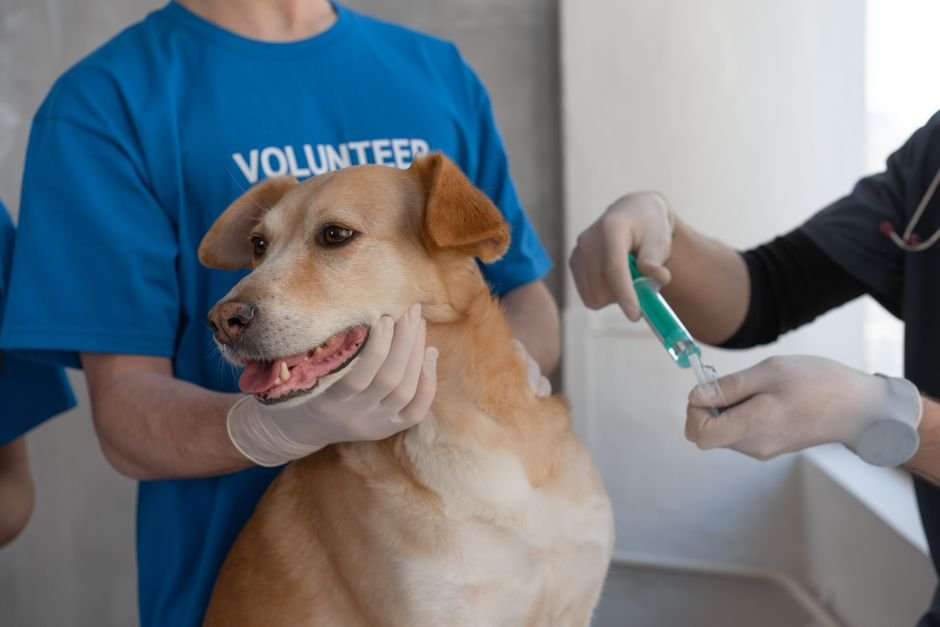
The Government Medical Officers’ Association (GMOA) has raised significant concerns over proposed legal amendments governing dog vaccinations, cautioning that the impending changes could severely undermine Sri Lanka’s national rabies control program. The medical body warned that altering the established operational framework threatens the progress made in containing the disease across the country.

At the center of the dispute is a specific clause in the draft legislation requiring that all dog vaccinations take place strictly under the direct supervision of a veterinary surgeon. The GMOA stressed that this mandate is fundamentally impractical given the severe shortage of government veterinary surgeons in Sri Lanka. Imposing such constraints, the association warned, risks stalling the active canine vaccination rollout managed through the Ministry of Health.
Currently, the country’s anti-rabies drive relies on specially trained vaccinators deployed across 362 Medical Officer of Health (MOH) areas, operating under the direct oversight of public health authorities. National dog vaccination coverage currently stands at approximately 60%, with authorities actively working to hit the 70% target necessary for optimal disease suppression.
Key Developments
- The GMOA warns that requiring direct supervision by veterinary surgeons for all dog vaccinations is unfeasible due to personnel shortages.
- Field inoculations are presently handled by trained vaccinators spanning 362 Medical Officer of Health (MOH) areas under health authority oversight.
- National dog vaccination coverage is currently around 60%, against a public health target of 70%.
- The GMOA recalled that transferring the program to the Department of Animal Production and Health in 2017 caused coverage to plummet from above 60% to roughly 6% in a single year, forcing its return to the health sector.
Pointing to the 2017 precedent, the GMOA urged authorities to carefully assess the practical, ground-level ramifications of the proposed legal reforms. The association emphasized that any legal changes must protect, rather than destabilize, Sri Lanka’s ongoing public health efforts to eradicate rabies.