
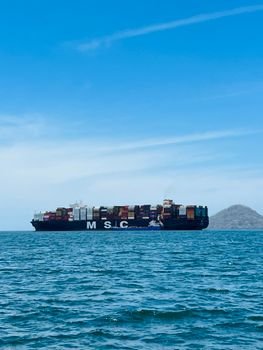
Government Takes Steps to Address Shipping Industry Challenges
In pursuit of transforming the Port of Colombo into a comprehensive regional maritime and logistics hub, the Sri Lankan government has announced plans to address pressing concerns within the freight forwarding and Non-Vessel Operating Common Carrier (NVOCC) sectors. During the 9th Annual General Meeting of the Sri Lanka Association of NVOCC Agents (SLANA), Ports Minister Anura Karunathilaka revealed that a Cabinet paper has been prepared to establish a dedicated committee aimed at addressing these issues. The move reflects the nation’s commitment to enhance its shipping capabilities amidst evolving global maritime trends.

Strategic Shifts in Maritime Operations
Karunathilaka emphasized the necessity of diversifying Sri Lanka’s maritime services beyond mere transshipment. He stated, “While transshipment will continue to remain an important feat of the Port of Colombo, our future ambitions should be much broader.” This strategic vision includes not only enhancing transshipment activities but also establishing Colombo as a critical node for regional distribution, warehousing, and logistics services.
The government’s initiative unfolds against a backdrop of significant changes in global shipping dynamics, characterized by rising geopolitical tensions and the need for resilient supply chains. To remain competitive, the Minister called for enhanced collaboration between the government and the private sector, emphasizing that creating a sustainable operating environment is essential for local businesses.
A Call for Industry Engagement
Karunathilaka urged SLANA members to maintain a constructive dialogue with policymakers, highlighting the invaluable insights industry expertise brings to the table. “Your industry knowledge and experience are invaluable in developing practical policies and solutions,” he noted, reinforcing the importance of a unified approach to navigating the complexities of the maritime landscape.
Capitalizing on Sri Lanka’s Advantages
The Minister acknowledged that Sri Lanka possesses several structural advantages, including its strategic location, existing port infrastructure, and proximity to rapidly growing markets. “The challenge is converting those advantages into greater economic value,” he stated, underlining the urgency to bolster the nation’s position as a leading logistics hub in the region.
Supporting this vision, the Sri Lanka Ports Authority (SLPA) has outlined plans to set up a new logistics hub, integrating free-zone and bonded warehousing facilities in the near future. This ambitious expansion aims not only to increase port activity but to foster a competitive and sustainable maritime ecosystem.
Conclusion
With the formation of the new committee and ongoing stakeholder engagement, Sri Lanka stands at a pivotal moment in its maritime sector. The government’s proactive approach to addressing shipping industry concerns further solidifies its commitment to transforming the nation into a robust player in the global logistics landscape. As the Port of Colombo evolves, the collaborative efforts between the government and industry will be crucial in steering the country towards a more prosperous maritime future.