
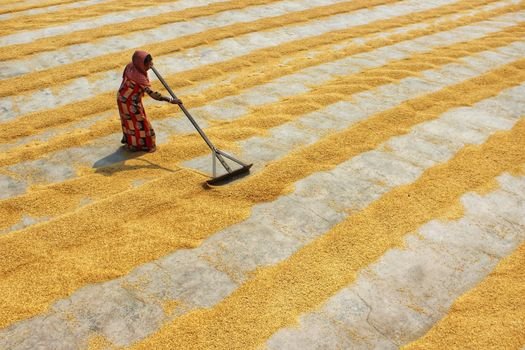
Government Launches New Interest-Free Paddy Procurement Scheme
The Sri Lankan government has unveiled an innovative interest-free financing scheme to support the 2026 Yala paddy procurement program, aiming to mend financial pitfalls from past procurement practices. This initiative is guided by the dual objectives of offering fair pricing to farmers and ensuring consumers can access rice at reasonable rates amidst ongoing economic pressures.
Financial Challenges Rooted in Past Debt
The backdrop of this initiative is grim. Recent audits have exposed delays in the repayment of earlier loans used for paddy purchases, resulting in substantial additional costs. The Treasury finds itself burdened with billions in legacy debt, a financial predicament exacerbated by poor repayment practices. For instance, loans obtained from People’s Bank and Bank of Ceylon for paddy purchases between 2019 and 2022 have accrued over Rs. 1 billion in interest and late fees, igniting alarm among economic analysts and policy makers.
Specifics of the audit findings paint a troubling picture: loans that were intended to stabilize the paddy market have morphed into financial liabilities, with the cost of delayed settlements ballooning into hundreds of millions. For example, a loan secured from People’s Bank in 2020 saw repayments extended from 36 to 51 months, while the costs attached to late settlements mounted significantly.
The New Scheme’s Framework
In light of these revelations, the newly designed rapid paddy procurement program will target registered small to medium-scale mill owners and cooperative societies, providing them with an interest-free financing cap of up to Rs. 25 million each. This funding is specifically earmarked to facilitate the purchase of paddy at government-guaranteed prices, projected at Rs. 120 per kg for red and white Nadu rice and Rs. 130 per kg for Samba rice.
Eligible participants must process the paddy and market the rice product within 240 days to ensure repayments are made without interest or additional charges, creating a streamlined approach that limits the complexities of previous financial arrangements. The new scheme commenced on August 12 and will be overseen in collaboration with district secretaries and agricultural development authorities.
A Hopeful Outlook Amid Struggles
As the Paddy Marketing Board (PMB) Chairman, Manjula Pinnalanda, comments on current operations, he notes that the losses incurred in previous procurement programs stemmed largely from governmental policies which led to the paddy being purchased at inflated rates while being resold at loss-inducing lower prices. Fortunately, Pinnalanda asserts that no losses have been recorded under the present administration as they embark on this promising new initiative.
This new procurement scheme may not only provide relief to farmers and consumers alike but could also signify a pivotal shift toward fiscal responsibility in Sri Lanka’s agricultural governance. With concerns regarding efficiently utilizing financial resources now at the forefront, the effectiveness of this program will undoubtedly be monitored closely in the months to come.