
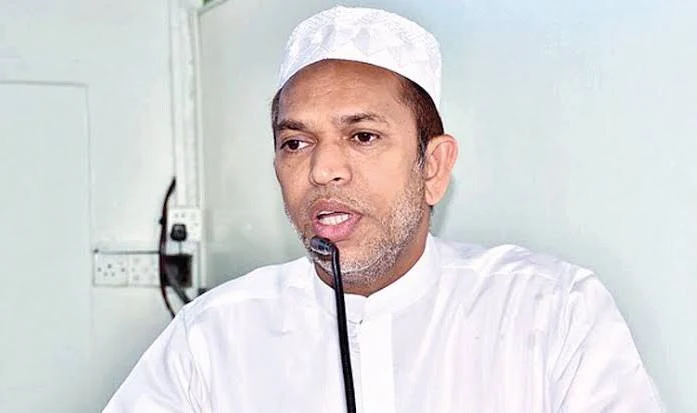
M.P. Hizbullah Appears Before Bribery Commission
In a significant development in Sri Lanka’s political landscape, Member of Parliament M.L.A.M. Hizbullah arrived at the Commission to Investigate Allegations of Bribery or Corruption (CIABOC) today to record a statement amid an ongoing investigation into his assets. The MP’s appearance at the commission has drawn public attention, raising questions about the integrity of political figures in the country.

Hizbullah, a prominent figure within the Sri Lankan political establishment, was summoned to provide details regarding the status of his assets as part of the CIABOC’s inquiry into potential corruption. The nature of the investigation has fueled speculation and concern regarding corruption within the government, a persistent issue that has plagued Sri Lankan politics for decades.
A Growing Concern
The Bribery Commission’s investigation into Hizbullah comes on the heels of rising scrutiny over the financial transparency of politicians in Sri Lanka. Citizens are increasingly wary of the nexus between wealth accumulation and political power, with many calling for more rigorous oversight and reforms in governance to combat corruption.
The commission has faced challenges in its capacity to address corruption effectively, often encountering resistance from political elites. As the public awaits the outcome of this investigation, there is a growing sentiment that accountability measures must be strengthened to restore trust in public institutions.
Background Context
The environment of suspicion surrounding Hizbullah is not an isolated incident. Several officials have faced similar inquiries, reflecting a broader cultural issue of corruption that pervades various levels of governance in Sri Lanka. This incident poses a pivotal moment for the CIABOC, testing its resolve and effectiveness in holding politicians accountable.
As the political arena continues to evolve, the outcomes of these investigations will set critical precedents for future governance. It is paramount for all stakeholders, especially the government, to commit to eradicating corruption to pave the way for a more transparent and accountable political framework.
Public Reaction and Implications
The reaction from the public has been mixed, with some expressing skepticism about the commission’s ability to take meaningful action due to the entrenched nature of corruption. Others remain hopeful that ongoing investigations will lead to substantial changes that safeguard the integrity of public office.
Moving forward, the implications of Hizbullah’s case extend beyond his personal affairs. The outcomes will likely influence public trust in the electoral process and the credibility of governmental institutions tasked with combating corruption. As Sri Lanka treads this critical path, it bears the potential to reshape the landscape of its political future, advocating for ethics, transparency, and responsibility among its leaders.