
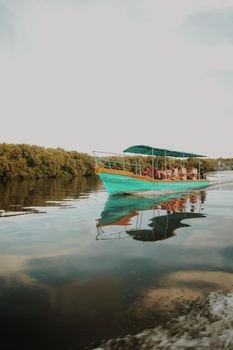
Mangroves play an essential role in maintaining ecological balance, yet their significance is often overshadowed by urban expansion, economic development, and environmental neglect. The mangroves in Negombo, Sri Lanka, serve as a critical example of this ongoing struggle between nature’s resilience and human intervention.

As a vital coastal ecosystem, these mangroves provide a habitat for various species, act as natural barriers against storms, and contribute to the purification of coastal waters. However, the ecosystem in Negombo faces significant threats. Global warming, pollution, and unsustainable tourism practices are jeopardizing the health of these vital environments. The urgency to protect such ecosystems cannot be overstated, particularly in the face of climate change and the inevitable rise in sea levels.
The economic implications of mangrove degradation are profound. A study estimates that mangroves can save coastal communities billions of dollars each year by reducing flood damage and enhancing fish populations. The estimated annual loss associated with mangrove deforestation can exceed $3 trillion globally. Such figures highlight the stark reality: neglecting mangrove preservation is economically detrimental. Not only do they protect coastal properties, but they also sustain local fisheries crucial for the livelihoods of many in Negombo.
Furthermore, the government of Sri Lanka must prioritize mangrove conservation in formulating coastal management policies. This includes enforcing stricter regulations on land use and implementing sustainable tourism practices. Local communities should be engaged in conservation efforts through education and stewardship programs, ensuring that they understand the intrinsic value of these ecosystems.
The mangroves in Negombo are much more than picturesque views; they are life-sustaining environments crucial for both ecological health and economic stability. The time for action is now. Failure to protect this natural resource will affect not only local wildlife but also the broader community’s resilience against environmental challenges. In understanding this link, we can forge a path toward sustainable coexistence with our natural surroundings—a journey that must start with safeguarding these vital mangrove ecosystems.