

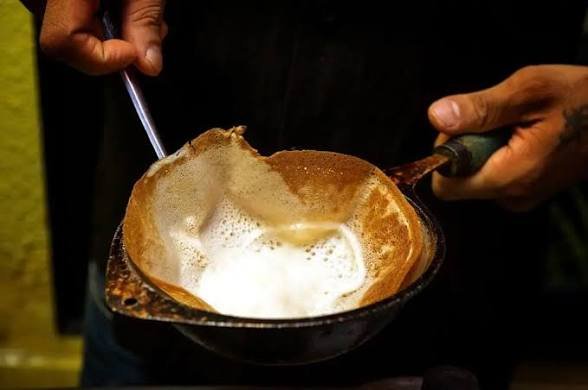
At the break of dawn, when the rooster first pierces the stillness and a damp nip lingers in the tropical air, there is an ephemeral perfection that can only be found beside a crackling hearth. It begins with the hiss of fermented rice flour and coconut milk striking the curvature of a hemispherical appa karaya. In those early waking hours, the ideal hopper does not merely yield to the touch—it shatters. Its delicate, translucent perimeter flakes into golden embers at the slightest graze, collapsing hot and fragile onto the plate before the steam has even parted.

Yet to define the soul of this quintessential staple through rigid doctrine is to misunderstand its shifting nature. The hopper is an instrument of mood and hour. While morning demands fragile ephemera, evening calls for structural backbone. Night hoppers arrive stiff-rimmed to stand up to robust sambols, though whispered folklore warns of rogue, unscrupulous hopper basses who once went so far as to introduce plaster of Paris into the batter to achieve that unyielding perimeter. Between these extremes rests teatime, reserved for the soft, yielding sponge of the sweet peni appa, steeped in the caramelized decadence of kithul treacle and thick coconut milk.
The Anatomy of the Appa Karaya

For generations, the true custodians of this alchemy have been the village acchis, who coaxed magic from woodsmoke and iron while the dawn was still blue. The geometry of the skillet dictates the culinary contrast. High initial heat bakes the batter swirled against the perimeter into the pettiya—a paper-thin, lacy lattice. Simultaneously, excess batter pools at the base under a domed lid, transforming into the pitha: a pillowy, soft-steamed mound born of gentle fermentation, offering a faint, pleasing sour-sweet note. Whether left plain to absorb fiery curries, crowned with a soft-yolked egg speckled with cracked black pepper and salt, or finished with a sweet swirl of coconut treacle, the result defies the sterile confines of fine dining. Indeed, the finest hoppers rarely emerge from high-end hotel dining rooms; they belong to street-corner stalls, their irreplaceable flavor sealed into steaming parcels bound by the inked pages of morning broadsheets.
The Architecture of the Indolent Afternoon
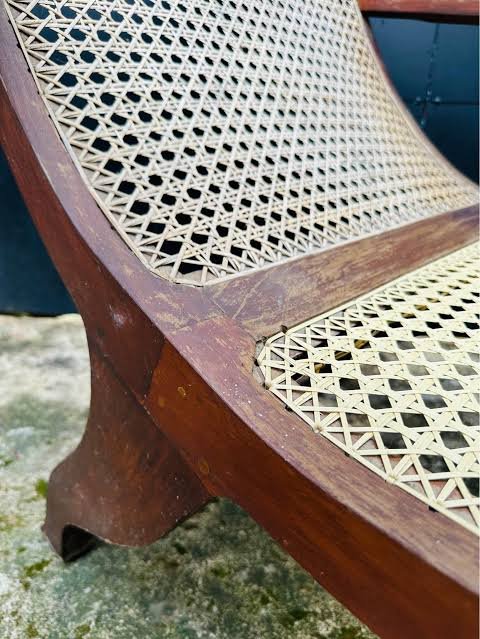
When the morning feast subsides and the tropical sun ascends toward its oppressive midday zenith, island life demands another ritual entirely: that of deliberate, unhurried stillness. Here enters the Hansi Putuwa. Bearing an ancestry that echoes across the Malabar coast of Kerala, the tea districts of Assam, the rubber groves of Malaysia, and the sugarcane expanses of the Caribbean, this reclining contraption was baptized by European empires as the planter’s or verandah chair. Yet nowhere did it find a more profound spiritual home than in the breezy corridors of the island’s stately walauwas.
Bearing names that simply honor its purpose—hansi meaning to recline and putuwa signifying chair, or Saai Kathirai in Tamil parlance—the piece evolved from a symbol of colonial estate surveillance into the undisputed seat of domestic patriarchs. Master craftsmen shaped it from dense, enduring native timbers: rich nadun, resilient jak, warm teak, and polished ebony. Across its sloping spine, tightly woven rattan (wewal) invited every passing cross-breeze to temper the midday heat. Its true stroke of mechanical brilliance, however, lay in its oversized, paddle-like wooden arms. Fastened by wooden pegs or dowels, the lower segments swing outward into cantilevered leg-rest platforms, eliminating the need for an ottoman and hoisting weary boots above the floorboards.
Shifting Shadows and Quiet symposiums
To sink into the woven rattan of a hansi putuwa with limbs extended is to enter an unhurried cadence that modern life has largely abandoned. Long before hip flasks attained cosmopolitan cachet, the island possessed its own distinct drinking sensibilities, where flat glass bottles of arrack and intimate tavern stools bore witness to quiet evening philosophies long before temperance movements swept the landscape.
From the fleeting morning crunch of a paper-wrapped hopper to the creak of polished timber on a shaded verandah, these enduring traditions are bound by a common thread. They are quiet monuments to the art of island living—a world where time is measured not by the relentless tick of the clock, but by the crispness of a crust, the drift of afternoon shadows, and the ease with which one leans back to watch the world go by.