
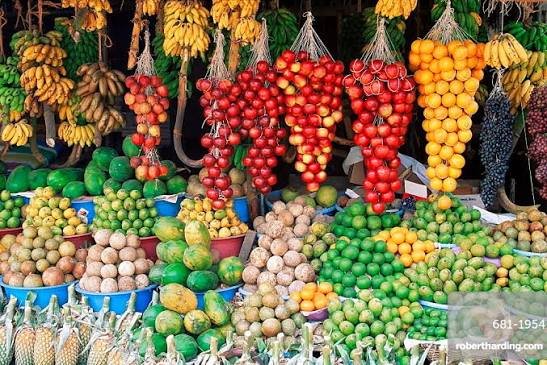
Along the sun-drenched tarmac winding through the Sri Lankan interior, long before the fragrance of bruised citrus and overripe durian reaches the window, it is the geometry that arrests the eye. It is an open secret that the island’s produce tastes extraordinary—from the dark, velvety mangosteens to the polarizing custard of roadside durians—yet half the seduction of buying fruit here belongs not to the tongue, but to the eye. Vendors do not merely put their wares out for sale; they sculpt them. Whether it is timber logs nestled into hypnotic interlocking circles on the bed of an open truck or dried karawala laid out with surgical precision, there is an innate Sri Lankan impulse to turn raw cargo into street-level art.

Pass through Kadju Gama, and you find cashews strung up in seductive rows while sellers in traditional redda hette beckon from the shoulder. Skirt along the highway toward Radawadunna, and the pineapples cease to be mere agricultural commodities, morphing instead into radiant, serrated battlements. The urge to arrange extends even to the wandering cyclist who pedals with king coconuts fixed into shapes mimicking a Vesak pandal. There is an unspoken philosophy at play: to display a harvest is to perform an argument of boundless abundance.
Architectural Illusions: The Art of the Fruit Pyramid
The most ubiquitous weapon in the vendor’s visual arsenal is the interlocking pyramid. For spherical and loose produce—from wood apples and avocados to smooth mangoes and oranges—sellers construct tight, geometric towers that appear to defy gravity. This is not casual stacking, but an exacting feat of roadside engineering.
Beneath the flawless exterior lies a quiet commercial psychology. The most vibrant, large, and completely unblemished fruits are positioned meticulously on the outward-facing perimeter, greeting the passerby with unbroken perfection. Deep within the core, the smaller, bruised, or irregularly shaped fruits are carefully tucked away. The resulting edifice projects an aura of structural invincibility and endless fertility, compelling drivers to pull over and purchase a slice of an abundance that feels mathematically guaranteed.
The Chromatic Contrast of the Market Aisle
In large municipal trading epicenters such as the Kandy Central Market, the strategy shifts from freestanding towers to steep, terraced landscapes. Here, vendors utilize tiered wooden or plastic step shelves, canting woven baskets and crates forward at precipitous angles toward the pedestrian aisles.
Within this amphitheater of produce, organization is governed by strict color-blocking. A long, crisp band of bright green limes or guavas is positioned immediately adjacent to a cascading tier of deep crimson water apples, known locally as pini jambu, or the vibrant, fuzzy pink mounds of rambutan. This sharp chromatic tension jolts the eye of the wandering shopper. Nearby, pineapples—known as annasi—are marshaled into dense, armored walls, stacked upright or on their sides with their spiked green crowns pointing uniformly outward. The prickly, golden ramparts provide a rugged, tactile counterbalance to the sleek, buttery skins of neighboring papayas and melons.
From Roadside Commerce to Sacred Offering
This instinct for sculptural produce stretches far beyond street commerce, rooted deeply in the island’s ritual and ceremonial traditions. During major temple festivals and cultural milestones, the abundance of the land is offered back to the divine through the medium of the fruit thorana. These massive decorative porches and temporary arches are thatched and draped entirely with thousands of fresh fruits, where heavy combs of bananas, vibrant orange thambili, and citrus stems are woven into elaborate, living tapestries symbolizing prosperity, fertility, and gratitude.
The same artisanal care manifests in domestic milestones. For pre-wedding Gaye Holud ceremonies and celebratory banquets, fruits are carved into delicate roses, leafy fronds, and graceful animal figures, then mounted upon multi-tiered grazing towers. Across every expression—from a humble pile of red hairy rambutans at a bus stand to an ornate sacred archway—the Sri Lankan approach to fruit remains unapologetically dramatic, proving that hunger is always, first and foremost, a feast of the eyes.