
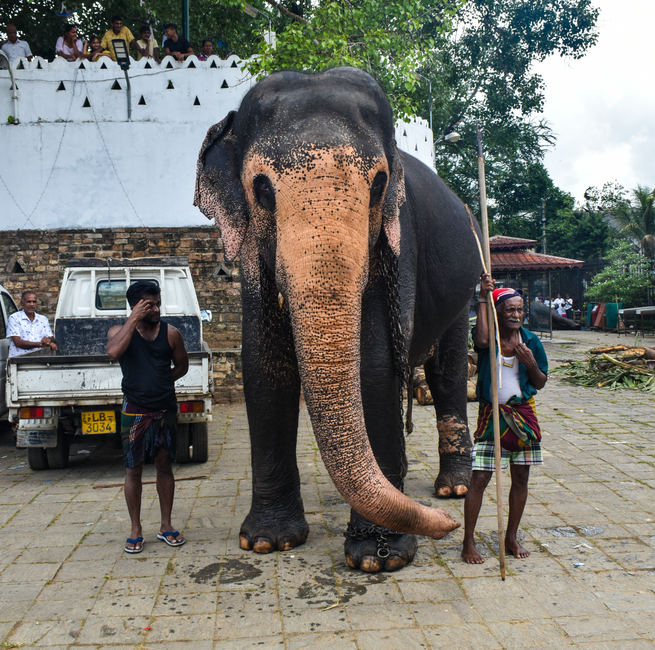
Night descends upon the highland rim of Kandy, not with silence, but with the sudden, sharp thunder of whip crackers cutting through the humid mountain air. Moments later, the low resonance of traditional drums takes over, rattling the pavement as torches flare to life, casting amber shadows against ancient temple masonry. Acrobatic Kandyan dancers spin in hypnotic arcs of silver and red, while flame throwers sweep fire through the darkness. Then, towering above the sea of faces, emerges the great tusker—cloaked in richly embroidered vestments aglow with tiny lights—bearing upon its back the venerated casket linked to the Sacred Tooth Relic. This is the Esala Perahera, and it is here that the island’s pulse beats loudest.

While travelers have long sought Sri Lanka for its wild coastlines and misty tea plantations, the island’s true magnetic north lies within its extraordinarily dense, unbroken calendar of faith and seasonal rite. Beyond the sun loungers and wildlife parks, cultural heritage tourism has experienced an unmistakable resurgence. Visitors are increasingly drawn to a living cultural map, where Buddhist and Hindu traditions, harvest rites, and communal feasts transform ordinary streets into open-air theaters of devotion and collective identity.
The Grand Procession of the Kandyan Hills
For ten to twelve days in July or August, the city of Kandy becomes the heart of the island’s spiritual imagination. Centered on the Temple of the Sacred Tooth Relic—Sri Dalada Maligawa—the Kandy Esala Perahera reaches back over a millennium, preserving rituals originally shaped during the Kandyan Kingdom to invoke rain and appease guardian deities. The procession unfolds in layers of ritual precision, swelling in grandeur toward the final evenings known as the Randoli Perahera, when streets pack tightly with pilgrims and travelers from across the globe, filling every hotel room across the mountain capital.
Yet, for all its sensory thunder, the grand spectacle closes in quiet sanctity. Before dawn on the morning following the final night, priests gather at the Mahaweli River to perform the Diya Kepeema—a symbolic water-cutting ritual that marks the conclusion of the sacred ceremonies, returning the ancient capital to quiet morning mist.
Luminous Evenings of Vesak and the Open Table
Come the full moon of May, the mood across the country shifts from the fiery drama of Kandy to an atmosphere of serene wonder. Vesak commemorates the supreme triad of Buddhist memory: the birth, enlightenment, and passing of the Buddha. During this week, urban centers and village lanes undergo an ethereal transformation. In Colombo, colossal illuminated pandals rise along avenues and temple boundaries, their dazzling, intricate light sequences illustrating classic narratives of Buddhist teaching, while delicate, handmade lanterns shimmer outside modest homes and bustling public parks.
What distinguishes Vesak is its profound ethos of quiet contemplation and radical hospitality. Dressed in unadorned white clothing, multitudes converge on temple grounds to observe sil, meditate, and place floral offerings before Buddha statues. Out on the roads, this inner reflection manifests as the dansal—generous roadside pavilions operated by neighborhood volunteers. Here, passersby and foreign wanderers alike are welcomed without charge, handed plates of rice and curry, bowls of noodles, glasses of sweet tea, or treats of ice cream. It is a shared, barrier-free celebration that trades commercial noise for an understated landscape of kindness.
The Shared Hearth of the Solar New Year
As mid-April arrives, another rhythm takes hold: the Sinhala and Tamil New Year. Rooted in ancient solar cycles and agricultural harvests, the holiday is celebrated concurrently across Sinhalese and Tamil households, bridging communities through synchronous domestic rituals. Days prior, homes are painted fresh, markets bustle with the sourcing of seasonal produce, and community gathering spots prepare for spirited village games.
Astrological reckoning dictates the exact cadence of the celebration. When cultural leaders announce the auspicious hour, hearth fires are ignited in unison across the island to boil the ceremonial milk rice. Eating, working, and religious observances follow these synchronized celestial moments, affirming a centuries-old connection between human labor, community bonds, and the natural passage of time.
In these street processions, silent temple courtyards, and communal kitchens, the island reveals a side no travel itinerary can fully capture on paper. The festivals of Sri Lanka are not curated performances preserved behind museum glass, but an active, breathing heritage—passed through the firelight, carried along the river currents, and shared at the open table.