
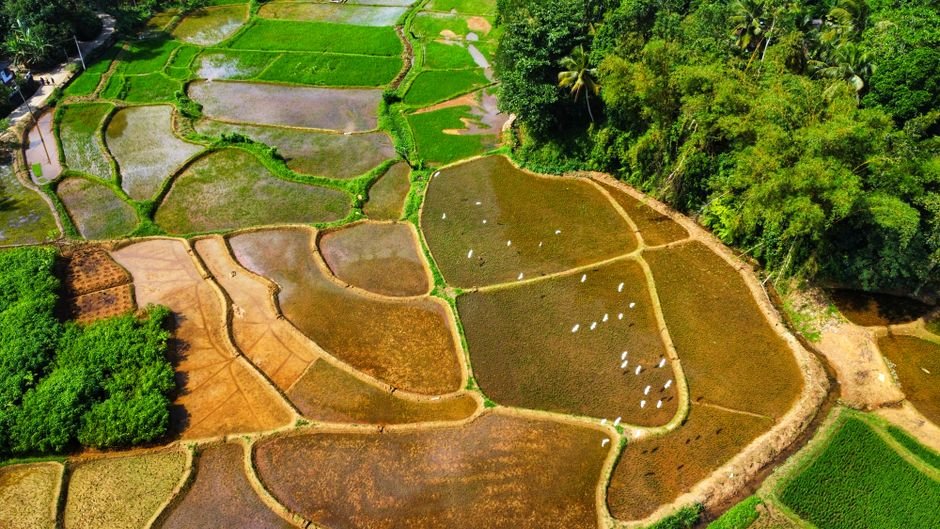
More than 78,000 people across Sri Lanka have suffered severe livelihood losses due to prolonged dry weather conditions triggered by El Niño. While the impact has sent shockwaves through regional economies, the Ministry of Labour has clarified that it currently lacks a legal mechanism to intervene, as the vast majority of those affected belong to the informal sector.

Key Highlights
- 78,368 individuals across 25,037 families in seven districts have been impacted by severe dry weather.
- Agriculture worst hit: Over 36,000 individuals in farming lost their primary source of income.
- Ministry limitation: The Labour Ministry stated its mandate is limited to formal sector employment issues and cannot directly intervene in informal sector losses.
- Government relief: A specialized government assistance program is currently being prepared to support affected families.
Speaking in Parliament, Environment Minister Dr. Dammika Patabendi disclosed that a total of 78,368 individuals from 25,037 families across seven districts—Monaragala, Badulla, Ratnapura, Trincomalee, Batticaloa, Ampara, and Anuradhapura—have lost their livelihoods. The drought conditions have disrupted a wide spectrum of informal economic activities, including farming, fishing, plantation work, livestock management, and small businesses.
According to official data presented by the Environment Minister, the agricultural sector experienced the heaviest impact, with 12,304 families comprising 36,875 individuals facing severe income disruption. The livestock sector recorded losses affecting 9,408 people, followed by the plantation sector with 7,889 individuals, the fishing community with 7,491 individuals, and self-employed workers accounting for 6,039 people.
Addressing the situation, Deputy Labour Minister Mahinda Jayasinghe noted that formal sector employees have not encountered drought-related job disruptions or company closures that would trigger ministry intervention. He emphasized that the ministry’s regulatory mandate is confined exclusively to formal employment relations.
“We can intervene if an employment issue arises in the formal sector, such as if factories and companies are closing down. At present, we don’t have a mechanism to intervene in the informal sector,” Jayasinghe explained, adding that the government is formulating a comprehensive broader assistance scheme to provide relief to affected communities.