
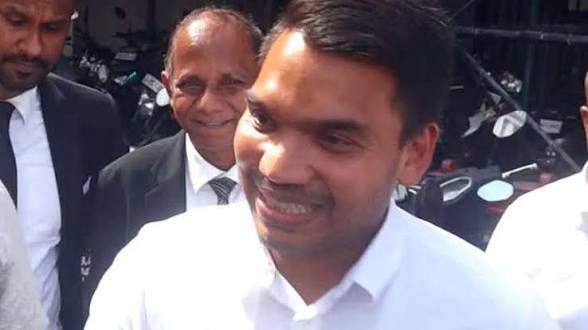
Namal Rajapaksa Faces Bribery Commission over Airbus Deal
In a significant development for Sri Lanka’s political landscape, Namal Rajapaksa, the National Organiser of the Sri Lanka Podujana Peramuna (SLPP) and a prominent Member of Parliament, appeared today before the Commission to Investigate Allegations of Bribery or Corruption (CIABOC). This appearance is tied to ongoing investigations surrounding a controversial Airbus deal, marking a pivotal moment in Rajapaksa’s political journey.

Summoned for a Statement
The Bribery Commission requested Rajapaksa’s presence to provide a formal statement regarding the said deal, which has been under scrutiny. This summons, communicated to him in writing, anticipates illuminating various aspects of the allegations that have marred the political scene in recent months. As he entered the Commission’s venue earlier today, Rajapaksa’s next steps were closely monitored by both his supporters and critics alike.
Implications for Political Stability
This appearance comes at a sensitive time for the SLPP, as the political landscape remains fraught with challenges stemming from corruption allegations and economic turmoil. Rajapaksa, who has maintained a high profile as a member of a politically influential family, is now navigating a landscape where public trust is fragile. The outcome of this investigation could have ramifying effects on both his personal career and the party’s electoral viability.
The Broader Context
Investigations into the Airbus deal are part of a broader effort by the CIABOC to address corruption in public procurement processes. The scrutiny of public officials has intensified in light of past scandals that have eroded accountability and transparency within the Sri Lankan government. Rajapaksa’s statement could potentially reshape the narrative surrounding the SLPP and its handling of previous controversies.
Public Sentiment and Political Ramifications
As public interest in this case grows, many are keen to see how Rajapaksa responds to the Commission’s inquiries. There is a palpable tension between the government and the electorate as citizens demand greater accountability from their leaders. The political implications of Rajapaksa’s appearance at the Bribery Commission could reverberate throughout the country’s political arena, affecting voter sentiment ahead of future elections.
As Sri Lanka continues to confront various socio-economic challenges, incidents like these highlight the critical importance of integrity and governance in restoring public confidence in political institutions.