
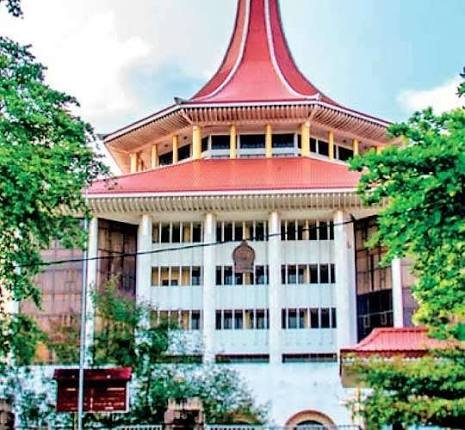
Supreme Court to Consider Constitutionality of 22nd Amendment
The legal landscape in Sri Lanka is poised for a significant examination as the Supreme Court prepares to address petitions challenging the proposed 22nd Amendment to the Constitution. Scheduled for deliberation tomorrow, this high-stakes review is set to engage a five-member bench, led by Chief Justice Preethi Padman Surasena.

The bench will include Justices Achala Wengappuli, Arjuna Obeyesekere, Sampath Abeykoon, and Gihan Kulatunga, who collectively hold the responsibility of scrutinizing the constitutionality of this amendment, which was submitted to Parliament by the government. The outcome could have monumental implications for the nation’s governance and democratic framework.
The Significance of 22nd Amendment
The 22nd Amendment is viewed as a critical reform aimed at enhancing transparency and accountability within Sri Lankan governance. However, concerns have been voiced regarding its potential implications on judicial independence and the balance of power within the state. The petitions in question question whether this amendment undermines the core principles of democracy enshrined in the Constitution, prompting this crucial judicial review.
Legal analysts and civil society observers await this verdict with bated breath, as the Supreme Court’s ruling may not only shape immediate future governance matters but could also set precedent for future constitutional amendments.
Broader Context of Judicial Scrutiny
This consideration of the 22nd Amendment is emblematic of a broader trend where the judiciary plays an increasingly pivotal role in mediating between governmental authority and constitutional rights. The Bar Association of Sri Lanka (BASL) has previously raised alarms over the amendment’s implications, advocating for a judicious approach in evaluating its provisions to ensure the sanctity of the judiciary is preserved.
What Lies Ahead?
As the nation gears up for this judicial confrontation, attention will also focus on the public’s response and the influence of civil society organizations advocating for democratic integrity. The impending ruling could either fortify or challenge the government’s reformist narrative, making this a crucial moment for both the judiciary and the electorate.
Tomorrow’s proceedings not only mark a moment of legal significance but also reflect on the resilience of democracy in Sri Lanka. All eyes are now trained on the Supreme Court as it prepares to deliberate on the future of a pivotal constitutional amendment amidst a climate of heightened political scrutiny.