
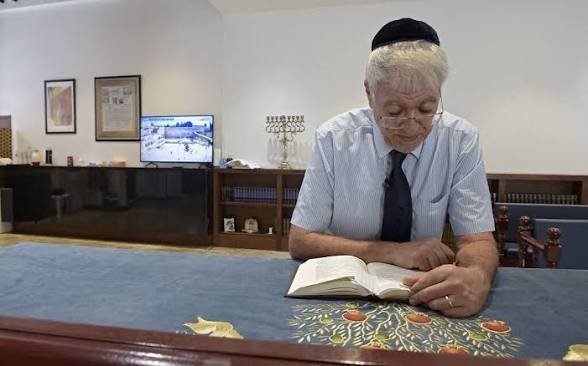
Hiriketiya Chabad House Sparks Tensions in Sri Lankan Community
The Ministry of Buddhasasana, Religious, and Cultural Affairs has announced plans to address rising tensions surrounding the establishment of new religious groups in Sri Lanka. This initiative comes in response to protests from local villagers and Buddhist monks against a newly opened Chabad House, which serves as a Jewish community and outreach center in Hiriketiya.
Government Response to Protests
W. P. Senadheera, Secretary of the Ministry, emphasized the delicate balance the government must navigate. “While there are new religious groups operating in various parts of the country, many involve Sri Lankan nationals as members,” he told local media. The challenge for officials lies in addressing public protests without infringing on human rights or freedom of speech, a concern brought to light during recent demonstrations.
The protests sparked by the Chabad House have raised questions regarding its establishment, with claims that it lacked the necessary approvals. Protesters argue that the center’s presence may disrupt community harmony and lead to further conflict among local residents.
Committee Formation and Future Recommendations
In light of these developments, the Ministry is forming a committee tasked with investigating the situation and evaluating the potential impact of these newer religious groups on the local community. While the Ministry traditionally focuses on the four main religions in the country—Buddhism, Hinduism, Islam, and Christianity—Senadheera acknowledged the need to expand their scope to include new, emerging religious communities.
Senadheera remarked, “Although we have seen protests against some of these groups, immediate action cannot be taken. A thorough examination is warranted to make well-informed recommendations.” He highlighted the complexity of navigating between respecting the rights of these new groups and maintaining peace within a diverse society.
A Broader Context
This situation sheds light on a growing phenomenon in Sri Lanka, where new religious movements are becoming increasingly visible. As the country grapples with its cultural identity and traditions, the Ministry’s actions will determine how it manages this intricate interplay between established beliefs and emerging communities.
As discussions unfold, the core challenge remains: how can a nation deeply rooted in its spiritual heritage embrace new identities while preserving societal cohesion? The upcoming committee’s findings could set a precedent for future interactions and regulations among the island’s diverse faiths.