
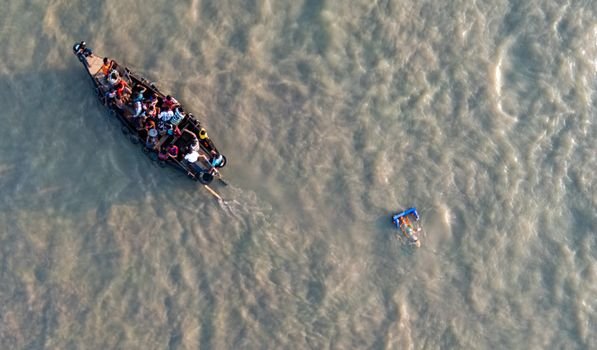
In an extraordinary display of humanitarianism, a Sri Lankan father and son extended their gratitude to Bangladeshi rescuers for a life-affirming operation that has drawn attention not only for its bravery but also for the underlying geopolitical implications. This rescue operation, performed in a complex and often tumultuous region, highlights the stark divide between how nations are often portrayed versus the lived realities of their citizens.

The father and son, whose circumstances required urgent assistance, expressed that they were treated “like family” during their ordeal. This characterization brings to the forefront a critical question: what does it mean to extend familial bonds across national lines, especially in a region fraught with historical tensions? The rescuers did not just save lives; they offered the warmth of human connection amidst adversity. Herein lies a narrative that contradicts the often contentious nature of international relations, emphasizing that empathy transcends borders.
As Bangladesh continues to improve its emergency response systems, such incidents underscore the potential for stronger bilateral ties, particularly in humanitarian efforts. Yet, the political implications go deeper. When nations participate in rescue missions, they reveal a willingness to collaborate that could pave the way for future partnerships, particularly in trade, culture, and shared security challenges. However, these relationships can be fleeting, often contingent on political climates that fluctuate more quickly than we can respond.
Moreover, the emotional resonance of the rescue cannot be understated. The narrative of a family finding solace among perceived strangers resonates in today’s climate, where fear and division dominate popular discourse. The recognition that Bangladeshi rescuers acted not out of obligation but genuine compassion offers a stark contrast to the often sterile, transactional view many have of diplomatic engagements. This incident compels us to rethink how we approach the concept of “nation,” urging all to consider the human element at play.
This thankful acknowledgment from those who were rescued raises another critical angle: it highlights the necessity of building resilience in communities worldwide. What systems were in place that allowed for such an effective response? Were there existing frameworks that facilitated swift action when the father and son found themselves in peril, or was this sheer fortuity? Following this incident, it is imperative that policymakers analyze how they can replicate this model of community and readiness in their own nations, taking cues from Bangladesh’s ability to respond.
As we reflect on this commendable act of rescue, the real challenge lies not just in gratitude but in sustaining the spirit of international solidarity that such events inspire. Rescuers should not be regarded solely as heroes in crises; their actions should inform ongoing dialogues around cooperation and collective responsibility in an increasingly interdependent world. By concentrating on what connects us rather than what divides us, there’s potential for real progress that can only enhance the global community as we face shared challenges, whether environmental, social, or economic.
The relationship forged through this incident could serve as a springboard for future initiatives—efforts that prioritize not only immediate relief but also long-term partnerships built on trust, respect, and mutual benefit. In this regard, the blessings exchanged between the Sri Lankans and their rescuers in Bangladesh serve as a reminder: sometimes, the most profound connections arise in moments of vulnerability and need, reshaping the narrative of our contemporary geopolitical landscape.