
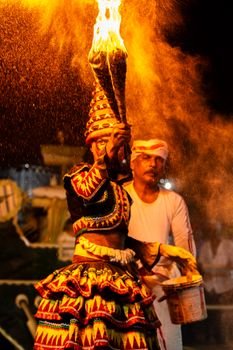
Cultural exchange programs hold the potential to bridge divides and foster understanding among diverse communities. The recent event showcasing Sri Lankan dancers in Ladakh exemplifies this promise, yet it also highlights the complexities and challenges inherent in such cultural interactions.

The dance event, held on October 11, featured a mesmerizing performance by 30 Sri Lankan dancers. The sheer number reflects a well-organized endeavor to share their rich artistic heritage. Dances such as the traditional “Uda Damba” and “Naga Rawa” not only entertain but also serve as vehicles for storytelling, celebrating roots, and cultural identity. However, what is often overlooked in such displays is the undercurrent of commercialization that can accompany artistic showcases. This event, while rich in cultural value, may unintentionally reinforce the perception of cultures as mere products to be consumed rather than as living traditions.
The context in which this performance occurred adds another layer of complexity. Ladakh, a region marked by its own unique cultural landscape, is known for its distinct identity shaped by Tibetan influences. While the introduction of Sri Lankan dance into this space may enrich the cultural tapestry, one must consider the implications of such exchanges. Are local cultures merely being enriched, or is there a risk of dilution amidst a wave of foreign artistic expression?
Furthermore, dimensions of accessibility and representation emerge when analyzing the motivations behind these cultural displays. This latest performance was part of an initiative by the Sri Lankan government, aligning with broader diplomatic goals. When culture is presented on an international stage, does it accurately reflect the voices and experiences of the artists involved, or does it become a curated narrative that aligns with foreign policy objectives?
In addition, the logistics of arranging a performance by 30 dancers involves significant financial investment and coordination. While the event may have been well-received, potential issues surrounding funding and budgeting often remain hidden from public scrutiny. Cultural presentations like this often require sponsorship and state support, which raises questions about priorities—are the funds used to uplift local art forms aligned with these cultural exchanges?
Ultimately, the captivating performance of Sri Lankan dancers in Ladakh serves as a reflection not only of artistic beauty but also of the intricate dynamics of cultural interchanges in a globalized world. As communities engage across borders, it becomes essential to critically examine who benefits from these interactions and how they shape the identities at stake.