
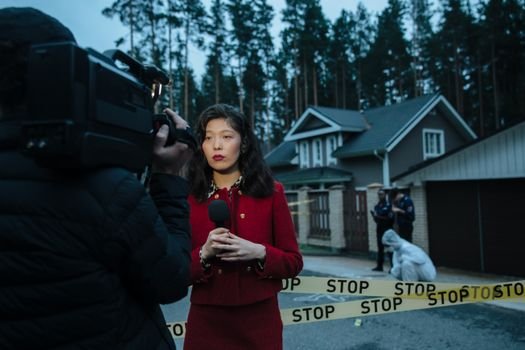
In a troubling incident that raises significant questions about transparency and accountability, allegations against the military are surfacing regarding the deletion of critical footage taken by a journalist during an accident. Such actions not only undermine the principles of a free press but also signal a broader pattern of behavior that could have serious implications for civil liberties and the public’s right to information.

The journalist involved reportedly recorded significant footage of the accident, footage that would have contributed to a comprehensive understanding of the event. Deleting such evidence cannot be viewed lightly; it evokes comparisons to authoritarian regimes where the removal of inconvenient records is used as a mechanism of control. This instance appears to challenge the very framework of democratic engagement, where independent journalism serves as a check on power.
Additionally, reports of threats issued by army personnel raise the stakes even further. Threatening journalists not only reflects an intimidation tactic but also indicates a profound disregard for the role of the media as an essential watchdog. The military’s response, rather than being one rooted in accountability, appears to lean towards silencing dissent and obscuring truths.
What is particularly concerning is the deeper message this incident sends to other journalists operating in conflict or military-dominated areas. The fear of retaliation can stifle reporting, and without journalistic freedom, the public is left in an information void. The suppression of evidence complicates the pursuit of truth and justice, leaving witnesses and victims vulnerable to a narrative shaped solely by those in power.
This should not merely be a localized incident; it must serve as a catalyst for wider discussion about the treatment of journalists worldwide. Holding military entities accountable for their actions in the realm of public communication is paramount. If these allegations are substantiated, calls for reforms and protective measures for journalists will be imperative to restore public trust.
Such incidents are not isolated; they reflect a pattern that requires urgent scrutiny. The protection of journalistic integrity is essential for any functioning democracy, and actions that threaten this integrity could signify a troubling trajectory that many would rather ignore. Without prompt intervention from oversight bodies, the risk of replicating authoritarian practices, even in ostensibly democratic environments, looms large.
Ultimately, this case should galvanize both public awareness and institutional response. A failure to act may render the next generation of journalists powerless in the face of similar threats, fundamentally damaging the relationship between the military and the public it serves. The repercussions of this scenario extend far beyond a single instance; they could shape the landscape of journalism and civil rights for years to come.