
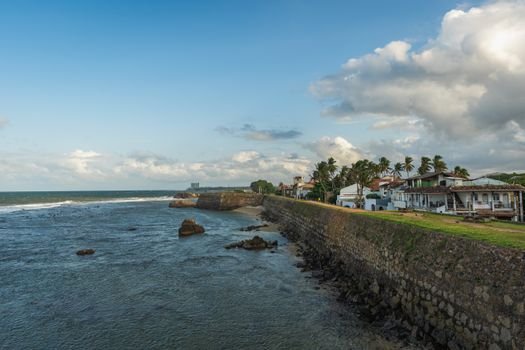
The historical ties between Greece and Sri Lanka, illustrated by the legacy of Alexander the Great, are often treated as romantic echoes of a long-lost past. However, the context of this relationship in the contemporary geopolitical landscape raises several pivotal questions about cultural identity, economic exchange, and the implications of soft power.

Anyone examining the current dimensions of Greek presence in Sri Lanka should first consider the cultural paradox at play. The idea of “Greek Lanka” offers more than just a nod to ancient conquests; it invites scrutiny of how colonization continues to shape modern national narratives. Alexander’s campaigns are emblematic not only of military might but also of the cultural exchanges that often ensued, creating complex legacies that transcend mere historical records. The blend of cultures, languages, and religions that resulted from these imperial pursuits often leads to cultural hybridity—a process that is both enriching and contentious.
The specifics of this relationship can illuminate the nuances of modern diplomacy. As of recent reports, bilateral trade between Greece and Sri Lanka remains modest, hovering around figures that seem disproportionately low compared to the potential. Sri Lanka’s strategic position in the Indian Ocean appeals to various global players, including Greece, yet trade initiatives lag behind those from more robust partners. The reported figures indicate a mere fraction of trade that could emerge if strategic initiatives were actualized into substantial economic agreements.
Additionally, questions arise when considering the diminishing visibility of Greek culture on the island. The vestiges of Greek influence—be it in language, cuisine, or philosophy—are evidently overshadowed by the robust presence of other cultures. This raises concerns about the sustainability of such cultural initiatives. Are these merely nostalgic ambitions, or do they reflect a genuine commitment to fostering mutual understanding and cooperation?
Furthermore, the contrast between the rich historical tapestry and current economic engagement poses a critical challenge for policymakers. The shifts in trade dynamics are not just about money; they reflect deeper trends in global economics and politics. Few would argue against the need for expanded trade between Greece and Sri Lanka, yet this ambition requires a strategic framework that acknowledges both countries’ evolving geopolitical contexts.
Lastly, the role of soft power in this narrative cannot be discounted. As Greece seeks to reclaim a spot in the international arena, it must leverage heritage not simply as a diplomatic tool but as a bridge for meaningful cultural exchanges. Cultural festivals, academic partnerships, and tourism can serve as conduits for re-establishing ties. Yet these efforts need a substantiated economic underpinning to yield real changes.
The discourse surrounding Greece in Sri Lanka should shift from a historical recounting to an urgent call for reinvigorating diplomatic and cultural exchanges. Without tangible efforts to enhance trade relations and cultural visibility, the story of this ancient connection risks being reduced to a mere footnote in the annals of history.