
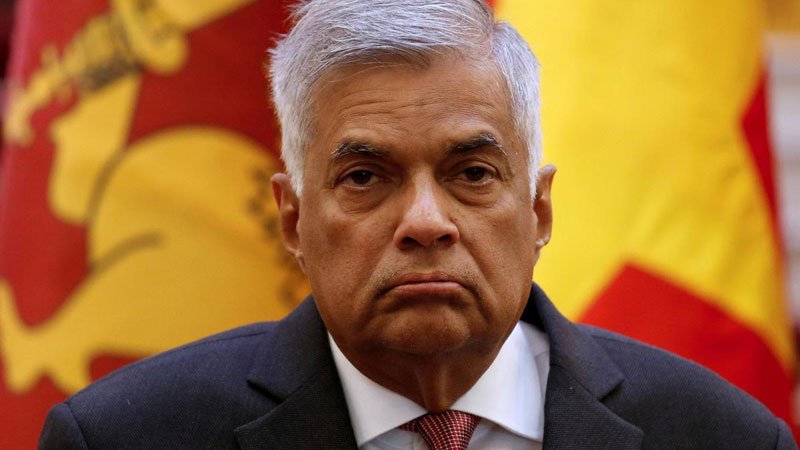
Ranil Wickremesinghe’s admission that he was the fourth choice to lead Sri Lanka in 2022 reflects a profound lesson in governance that extends far beyond mere political maneuvering. This candid revelation strikes at the heart of a leadership crisis that has permeated the political landscape of Sri Lanka, revealing not just the fragility of political alliances but also the deep-seated disillusionment within the electorate.

To acknowledge being a fourth choice implies a series of failures among those considered more desirable for the role—failures that might include poor governance, lack of vision, or an inability to effectively address the country’s escalating crises. The implications of this rank within the selection process are significant, suggesting a political apparatus riddled with indecision and instability. Wickremesinghe’s ascent to the presidency was not a clear mandate but rather a default option in a landscape characterized by chaos and uncertainty.
This reality prompts critical questions: What does it say about the existing political framework when the fourth choice ends up in command? Are the systems in place designed to select leaders based primarily on merit and the public’s confidence, or do they merely reflect an outcome of political expediency? The Sri Lankan electorate deserves better than a leader who arrives at the helm through a series of backroom deals and poorly defined allegiances.
The crisis in Sri Lanka has been characterized by spiraling inflation, political unrest, and significant public dissatisfaction. The backdrop against which Wickremesinghe accepted the position as a less-than-ideal candidate paints a dismal picture of the country’s political health. It raises a critical need for introspection—are leaders chosen based on a superficial understanding of public sentiment, or is there a genuine effort to cultivate effective governance?
Moreover, this confession underlines how leadership in democratic frameworks should ideally reflect the active will of the populace rather than serve as a last resort. The political calculus that elevated a fourth choice into a position of power suggests a disconnect between political elites and the citizens they purport to serve.
For those observing the ongoing developments in Sri Lanka, Wickremesinghe’s position epitomizes the urgent necessity for reform—not just in political institutions, but also in the way leaders are chosen and held accountable. The time has come for a discourse on how to elevate suitable candidates rather than merely defaulting to those who happen to be left standing after a series of political eliminations.
In essence, Wickremesinghe’s comments encapsulate more than just a personal narrative; they contribute to a broader critique of a political culture in dire need of renewal. The Sri Lankan public can only hope that the lessons gleaned from this tumultuous chapter will influence a future where leaders emerge not from a pool of reluctant contenders but from a process driven by merit, vision, and the true mandate of the people.