
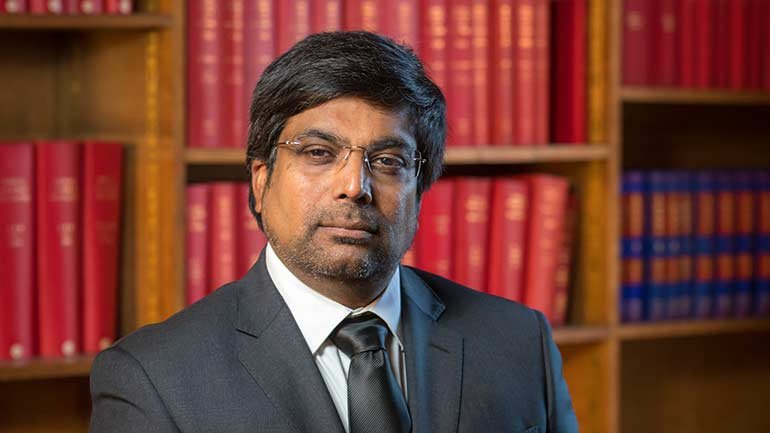
The recent knighthood bestowed upon Sri Lankan-born Professor Nishan Canagarajah by King Charles raises a multitude of significant considerations, spanning the realms of academia, representation, and the evolving role of the British monarchy in recognizing global talent.

First, the announcement itself highlights the increasing visibility of individuals from diverse backgrounds within prominent global institutions. The elevation of Canagarajah, who has made considerable contributions to the field of education and academic leadership, signals an acknowledgment of the value that multicultural perspectives bring to scholarly discourse. In a time when many educational institutions are grappling with accusations of insularity and bias, recognizing figures like Canagarajah may come as a much-needed endorsement of inclusivity and diversity.
Moreover, the symbolism of a knighthood carries weight, particularly in a historically colonial context. While the honor is a personal accolade, it also has implications for Sri Lanka and its diaspora. It challenges the narrative of post-colonial reconstruction by turning the global gaze toward the accomplishments emerging from regions often undervalued in such discussions. Sri Lanka has a rich history of educational scholarship and innovation, yet figures like Canagarajah risk being overshadowed in a crowded landscape dominated by Western narratives. This recognition may be a step toward rectifying that imbalance, inspiring future generations from similar backgrounds.
However, this knighthood is not merely an accolade; it also prompts us to reflect on the criteria for such honors. While Canagarajah’s contributions to academia are noteworthy, one must interrogate the mechanisms by which individuals rise to prominence within hierarchical educational systems. The elevation of one individual risks masking systemic issues within institutions concerning equity, accessibility, and recognition. Are we genuinely witnessing a progressive shift, or is this recognition merely a veneer placed atop persistent structural inequities in academia?
Additionally, as the monarchy evolves under the reign of King Charles, it faces the challenge of remaining relevant in an ever-changing global landscape. By selecting a recipient from a minority background, there’s a dual narrative at play: promoting diversity and attempting to bolster the monarchy’s image as being attuned to contemporary societal values. The public reaction to such honors will be telling; people will be scrutinizing whether this is genuine advocacy for inclusivity or a calculated PR strategy to connect with a multicultural populace.
In conclusion, while Professor Nishan Canagarajah’s knighthood is undoubtedly a prestigious achievement and a potential catalyst for greater representation in academia, it beckons a wider conversation about diversity, meritocracy, and the legitimacy of honors bestowed in a globalized era. The implications of this recognition reach far beyond the individual, touching on the legacy of colonialism, the integrity of academic institutions, and the ongoing evolution of societal values as reflected in royal accolades. Each perspective threads into a broader narrative where individuals, institutions, and historical contexts converge.